

I found myself asked many questions this past year, which I deniably laughed off.
The first was from Brian Braun-Duin, who asked if he should go for Grand Prix Master. Of course not. There are going to be far better players than him going for the same goal. It would be foolish of him to invest an entire year into failure.
The second question asked was whether or not BBD was sane for doing this, and it was asked by many. Of course not. As weeks went on he was falling further from the pack. It was hopeless, yet the man continued to get into his car, book flights, and sleeve decks.
The final question was if he had what it took to beat the best in such an isolated tournament. Of course not.
Could he become World Champion?
Of course not.


Creatures (25)
- 4 Noble Hierarch
- 1 Spellskite
- 3 Drowner of Hope
- 2 Eldrazi Skyspawner
- 4 Eldrazi Displacer
- 4 Reality Smasher
- 4 Thought-Knot Seer
- 3 Matter Reshaper
Lands (24)
Spells (11)
Creatures (25)
- 2 Knight of the White Orchid
- 4 Reflector Mage
- 3 Thraben Inspector
- 4 Thalia's Lieutenant
- 4 Tireless Tracker
- 4 Lambholt Pacifist
- 1 Duskwatch Recruiter
- 3 Thalia, Heretic Cathar
Planeswalkers (2)
Lands (25)
Spells (8)
My story for Worlds began when I clinched my slot for the event by winning Round 16 of Pro Tour Eldritch Moon. Once I’d qualified, it was time to figure out who, if anyone, I would be preparing for the tournament with. I asked a few of the Face to Face guys what their squads would look like, to which I was surprised not hearing any mention of their teammate Brian Braun-Duin. I probed them to find out why they had excluded him…to find out he said he wanted to work with me.
Flattered as well as shocked, I questioned this decision. You see, Brian and I are very close thanks to our proximity. We both live in Roanoke, VA, and usually attend the same events. This has made it very easy for us to prepare for most events together.
Almost all of them, except Pro Tours. He’s worked with F2F, while I’m a part of Team EUreka. This could be construed as some type of “Romeo and Juliet” scenario, but we are both where we want to be. That’s why it was a shock that he would rather work with me than with his usual testing partners. BBD and I joined up with the rest of the qualified members of Team EUreka and became a “super team” for the World Championship.
Being on a team of four for such an exclusive event is an interesting decision. With only 24 contestants, a team of four ends up accounting for one-sixth of the field. Not only are there serious issues with internal cannibalization if teammates are not interested in playing the same decks, but there’s also a deep fear of being wrong if the whole group is on the same deck choices. With so many people on the same deck, when you are wrong, you’re very wrong and it costs your entire group a chance at a World Champion.
The benefit to being on such a big team is you can work through many more ideas in the short time you will have for testing. For example, Joel, Brian, and I all went out to Seattle right after the Invitational in preparation for the World Championship. Martin Muller joined us a few days later, given his school schedule. This gave us over a week to test in person and work through all of the ideas we had going into the event. With so much dedicated time, our games should theoretically be sharp and ideas sound. Testing live with Worlds competitors would be much better than grinding away on Magic Online.
The first thing we had to do was figure out what we expected to play against. There would be twenty other players in the event for us to prepare against. Most of them had “histories” spread throughout the internet that would give us some insight into what we should predict for them to bring to the table. We also had to take into account what teams they would make up. Luckily this information isn’t kept too secretive to those in the know, which made it much easier for metagaming purposes.
Known Teams:
Luis Scott-Vargas, Paulo Vitor Damo da Rosa, Mike Sigrist, Sam Pardee
Steve Rubin, Andrea Mengucci
Ondrej Strasky, Oliver Tiu
Marcio Carvalho, Thiago Saporito
Reid Duke, Owen Turtenwald
The last eight would either have formed teams without our knowledge or would be testing individually. This was the information we had to work with, but first we would catalog what we would “predict” each person would play.
Metagame Notes
These notes are not to be used as gospel, but as a baseline to what others might be thinking as well. Preparation for a tournament like this starts with initial metagame predictions, but many other factors must be accounted for. For example, I played Death’s Shadow Aggro at the Invitational, while two of my teammates have been playing the deck for some time now.
Creatures (19)
Lands (17)
Spells (24)
It would be shocking if the rest of the field hadn’t picked up on that information and made sure to respect the deck in the event. This would give us the option to ignore playing the strategy and a potential edge in the event by knowing the rest of the field would be forced to respect it. The same goes for other strategies piloted by our adversaries as well. The mind games begin!
My initial strategy was to actually do well at the Invitational with Death’s Shadow Aggro with zero intent to play it at the World Championshp. My sights were actually on breaking open G/R Breach, thanks to its theoretical good midrange matchups and the fact that “Land” strategies are rarely respected at prestigious events like this. As our notes suggested, we predicted a large quantity of Abzan and Bant Eldrazi, which could be the best metagame for G/R Breach, especially if they are all focused on defeating small creatures.
Sadly, G/R Breach was just not that impressive. I wasn’t even beating Abzan, which should have been one of the deck’s best matchups. Granted, I didn’t get to a list similar to Oliver Tiu’s that did away with Through the Breach and focused more heavily on Scapeshift. This was a wonderfully executed strategy from the youngster and proves exactly why he got the Constructed Master slot to begin with.
Creatures (8)
Lands (27)
Spells (25)
Even though Modern preparation felt like losing fingernails, I was quite happy with Standard throughout the entire week. I played Bant Humans at the Invitational, expecting free wins thanks to sideboarded Tragic Arrogance, but was surprised at how well the deck was doing even after I wasn’t accounting for “free wins.” The deck was the most winning strategy in our World Championship testing and would be a great choice if enough people went down a path I thought they would. I also was not afraid of playing the deck two events in a row, since most people would not put me on the deck for the World Championship, as I am notoriously known for playing a different deck each week. Sometimes it’s good to have a reputation!
My theory for Standard was that Bant Company was enemy number one and for obvious reasons. The deck with the highest win percentage against Bant Company is Jund Delirium, which was also a deck that our team designed for the last Pro Tour, making it possible for us to play it in the event. Not only that, but a couple of the other World Championship competitors could be seen playing Jund Delirium as well. This meant that there was a good possibility of enough people coming to the event with Temur Emerge. Not only did the deck stand a chance against Bant Company, but it preyed on all the decks trying to beat the Company menace.
So how does Bant Humans fall into this metagame? Well, Bant Humans is even against Bant Company, as I can tell, as long as the opponent knows how to play the matchup correctly. We might have the edge going into Worlds if the Bant Company players don’t practice against the deck enough, and that would be likely, since so many people believe Bant Company to have the edge and they won’t have enough time to double-check all of their judgments. Bant Humans has a bad Jund Delirium matchup but is quite favored against Temur Emerge and BG Delirium, especially if they focus their efforts against Bant Company.
It took some time, but I was able to get the whole group onboard with Bant Humans. All that we had left to do in Standard from that point was train the squad on how to play the deck.
Creatures (26)
- 2 Knight of the White Orchid
- 4 Reflector Mage
- 3 Thraben Inspector
- 4 Thalia's Lieutenant
- 4 Tireless Tracker
- 4 Lambholt Pacifist
- 2 Duskwatch Recruiter
- 3 Thalia, Heretic Cathar
Planeswalkers (1)
Lands (25)
Spells (8)
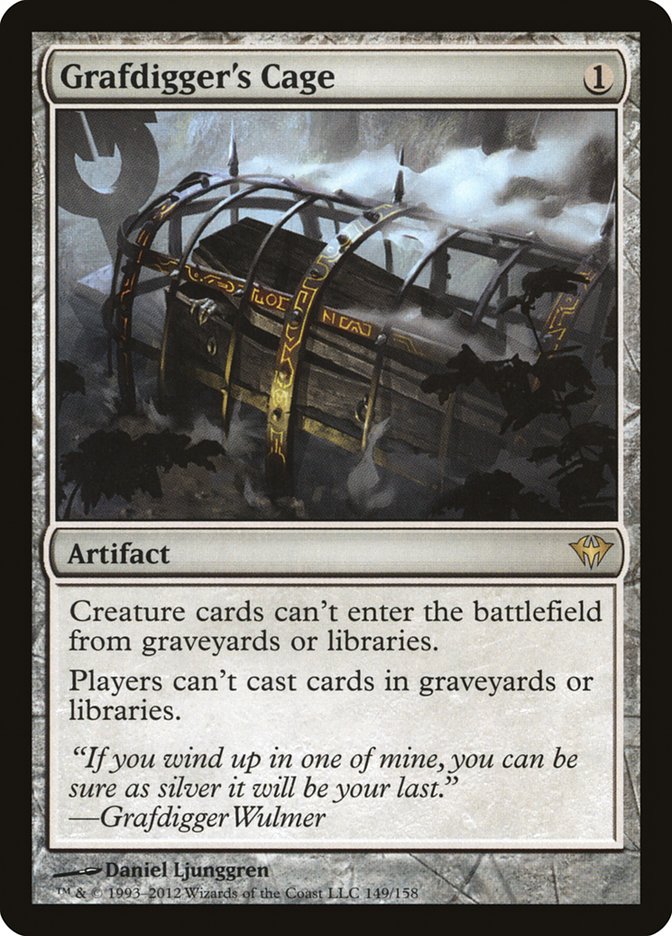
Things were not going as well in Modern. Joel and Martin both liked Living End, but Brian and I couldn’t get behind the deck. Even after a decent amount of testing, I just couldn’t see why this was a strong choice. The deck did make sense on paper. Most players will bring limited graveyard removal due to not predicting Dredge to make an appearance, and the hate people did bring would come in the form of Grafdigger’s Cage, which doesn’t have any impact on Living End.
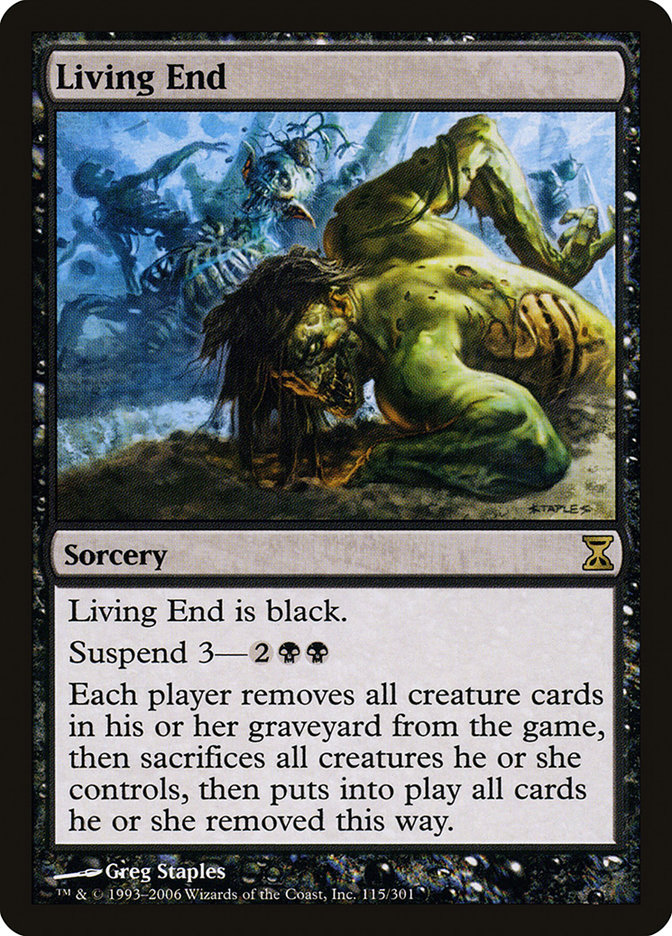
That said, the deck doesn’t win games of Magic on paper and it felt slightly underpowered even against its “good” matchups. Grim Flayer was a huge issue, since it couldn’t die to Shriekmaw, and Eldrazi could simply do its “Eldrazi” thing and win games it had no business doing so. I was lost.
I was scrambling as the other three became settled in both formats. Brian decided to just play what he knew in the form of Bant Eldrazi, a deck that I believed to be a good choice, but it was something I had limited testing with and I didn’t want to audible to a deck I was unfamiliar with when it wasn’t “something special.” I went back to old ideas like playing Death’s Shadow Aggro and G/R Breach, but the losses just kept coming.
Nothing seemed good in the format, and even the idea of falling back onto Abzan sounded vomit-inducing. I almost did exactly this, since options and time were winding down, but I’ve never really been a fan of Abzan. The only time I’ve ever liked the deck was when Snapcaster Mage and Kolaghan’s Command ruled the format. That time has come and gone, making the strategy pretty lackluster to me. I was lost until I saw this magnificent beast.
Creatures (14)
Planeswalkers (5)
Lands (23)
Spells (18)
Isn’t this beautiful? I fell in love with how lean this deck was, especially after testing so much with Abzan. Fourteen two-drops followed by five Lilianas! It looks like a crazy person designed it, but after testing the deck, I’d like to say Paul’s a mad scientist. This configuration changed the game for how the Jund and Abzan matchup plays out. Before Grim Flayer and Liliana, the Last Hope, Jund didn’t have many tools to defeat an early Lingering Souls.
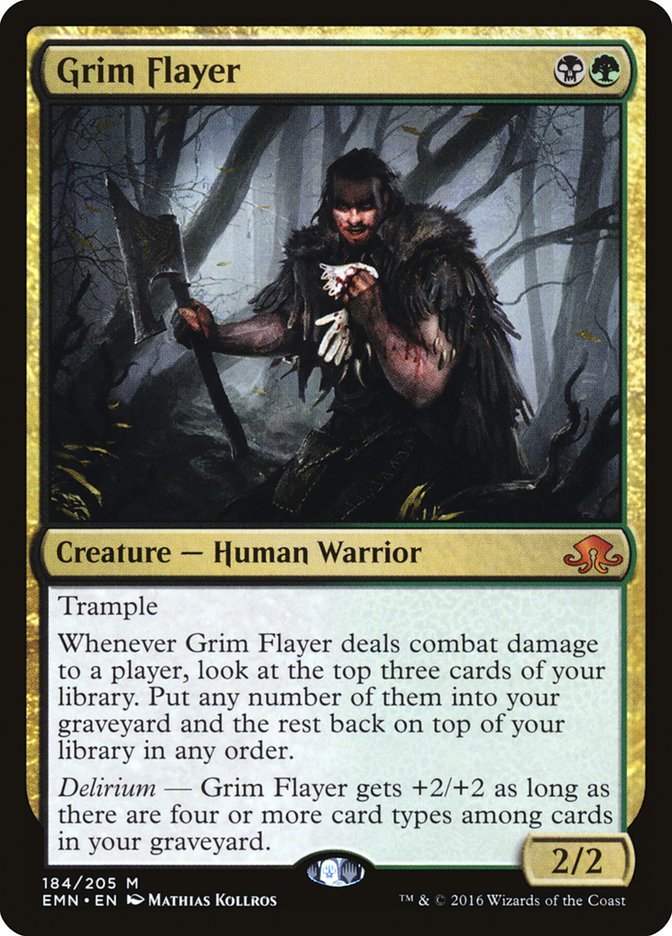
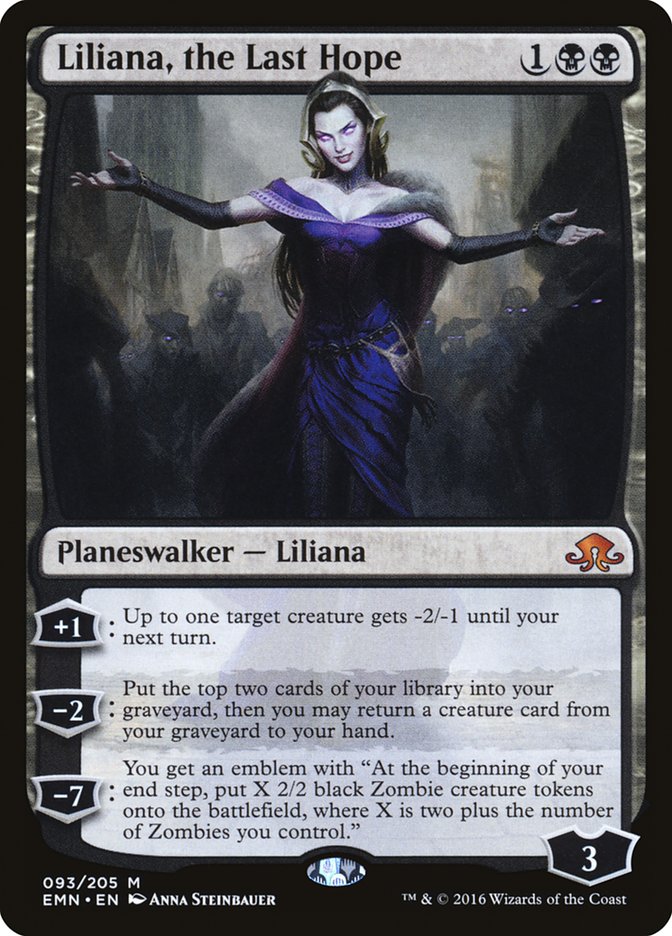
The best thing Jund could do was resolve a Dark Confidant, but that rarely stuck. Now Jund has eight creatures that need to be dealt with, giving very little time for an early Lingering Souls turn. This helps Jund set up against the flying tokens along with potentially winning the game with early creatures, not to mention Liliana, the Last Hope picking off all of the tokens before they get out of hand.
I was in love with the deck, but mainly because time was running out and everything else sucked. In the end, you can’t escape who you are and I was quite all right with that.
From Dizzler to Dazzler
As for the tournament itself, I could write this part in many different ways. I could talk about how unlucky I felt in some of the more important matches. I could talk about how I felt both of my deck choices were great, and how finishing 7-7 is a defendable record in such a difficult event. I could even talk about what it’s like to be a part of such an intense event. I would write such things if this story was about me, but it’s not.
Of course not.
This story is about Brian Braun-Duin. The man who grinded his way to the center stage. We as Magic players like to use the term “The Grind” as a rite of passage to those who want to elevate their game to the next level. That definition doesn’t apply to Brian’s story. It’s more than that. There were many times in his career than almost everyone out there would have taken a step back and said, “Maybe next time.”
Not Brian. He wanted it more than anything, and put in the hours to get it. His road wasn’t easy, but enough attempts got him what he wanted.
Sunday morning before the Top 4 was interesting. I was no longer a competitor in the event, making my storyline irrelevant. All that mattered was helping Brian, but I wasn’t stressed in the slightest because I knew how this day would end. I had faith in my deck, and faith in the man piloting it. Sure, Brian might not have been the most prestigious player left in the tournament, and he even had to get through a Hall of Famer to find a seat in the finals, but that didn’t scare me. I knew how this tournament would conclude.
To be recognized, one must defeat the accomplished first. Brian might not have had many moments in his career to do this, but today would be that day. Today he would be put in the history books as World Champion. Today he would be recognized for his hard work and turbulent journey. Today he would become accomplished.
I look back in humiliation that I didn’t have the utmost faith in my close friend when he started this journey, but truth be told I didn’t have the tools to do so. Through this journey, Brian gave me the tools to think differently and understand that just because the deck is stacked against someone doesn’t mean they should give up. You just have to put yourself out there and not be afraid of a long journey that doesn’t always reward you with what you want.
You just have to be more like “The Dizzler.”
But not too much, because puns are the actual worst!