

I feel like I say this during every rotation, but it’s the most important principle that most players fail to heed when approaching a new Standard format: this format is a new entity and needs to be treated as such. Looking at the previous format and building with updated versions of those decks in mind may lead you to a good deck, but too often it is a fool’s errand and leads you to a skewed perception of the new reality.
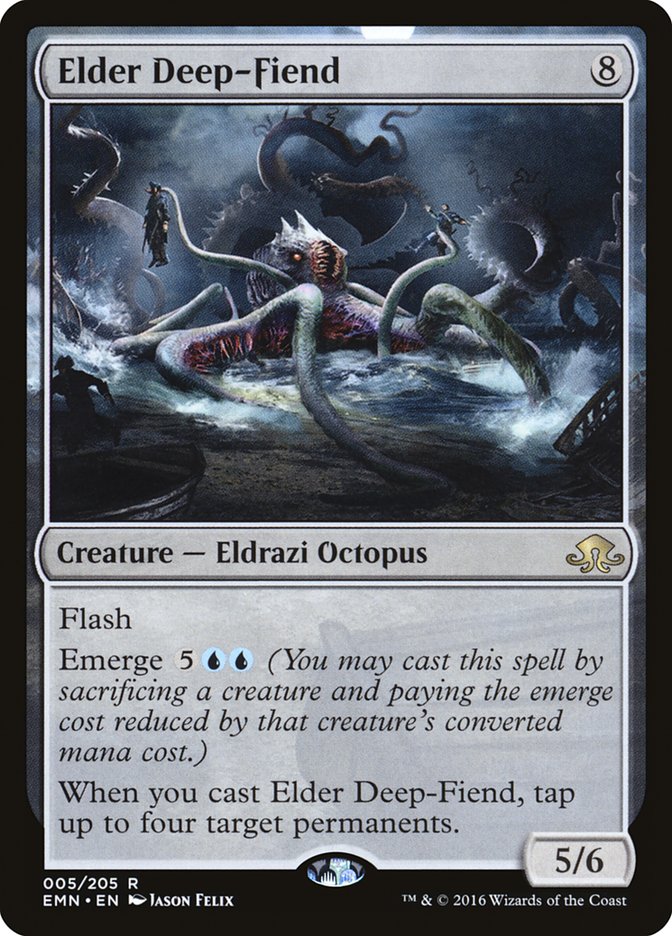
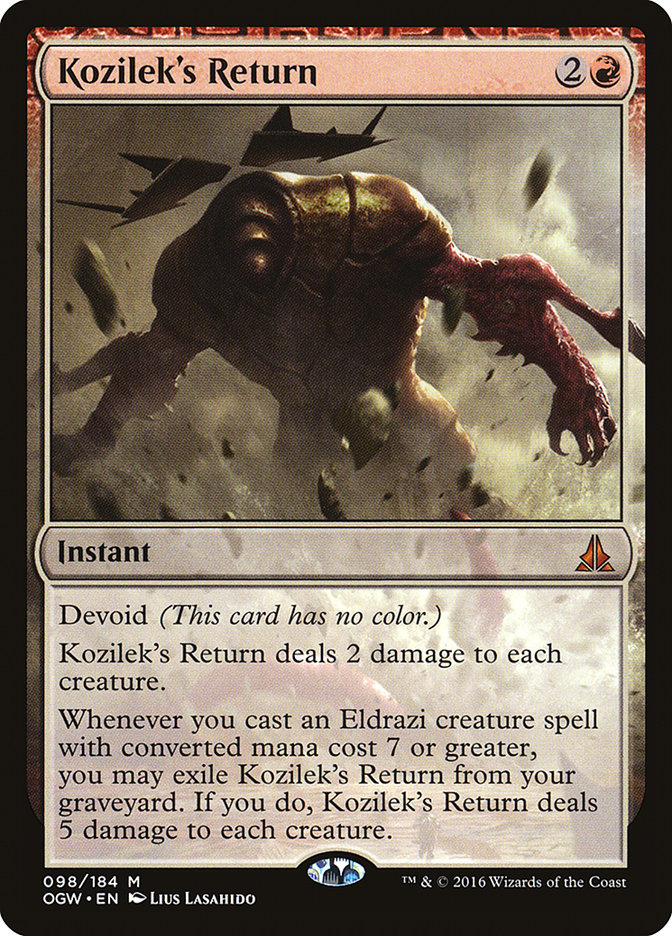
You have to do your best to look at the new format with fresh eyes. Yes, the previous format has likely shown us some powerful shells, like Emerge plus Kozilek’s Return, but the cards surrounding that shell may need to change drastically in order to compete with Kaladesh. Maybe there are new cards that deserve to be incorporated into an old shell or simply that the demands of the new format are much different from those of the old. Either way, ridding yourself of the preconceived notions that have burrowed their way into your brain after months of reinforcement is the single most important step you can take to gain an edge in the early weeks of a post-rotation Standard format.
After all, Standard’s history is littered with decks or cards that shift from format all-star to irrelevant after rotation. It all seems to happen so quickly. One week we’re decrying the dominance of Delver of Secrets or Thassa, God of the Sea, and the next, everyone is wondering why they can’t make such broken cards work anymore. The reality is time in Magic doesn’t work continuously. Rotation, and to a lesser extent the release of any new set, creates an abrupt change that disrupts the normally organic evolutionary flow of the metagame from one week to the next.
Most often this concept is demonstrated through the cautionary tale of ignoring previously unplayed cards that break out with a change of scenery. But equally important is to not be too attached to cards which were previously dominant. We went from a format where Deathmist Raptor was a premium card to one where it was unplayable despite the fact that the most successful decks were green, creature-based attrition strategies.
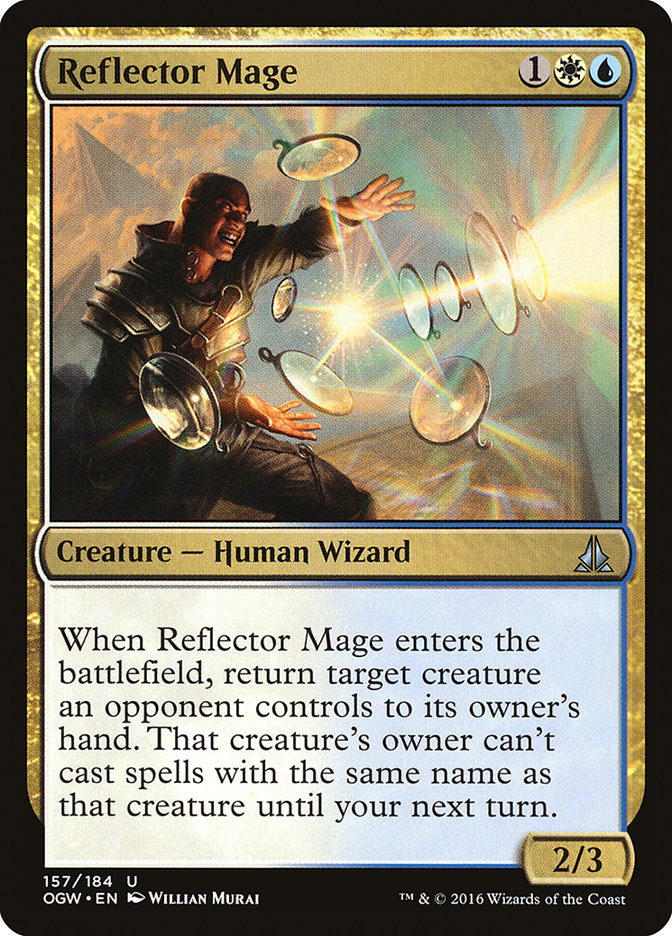
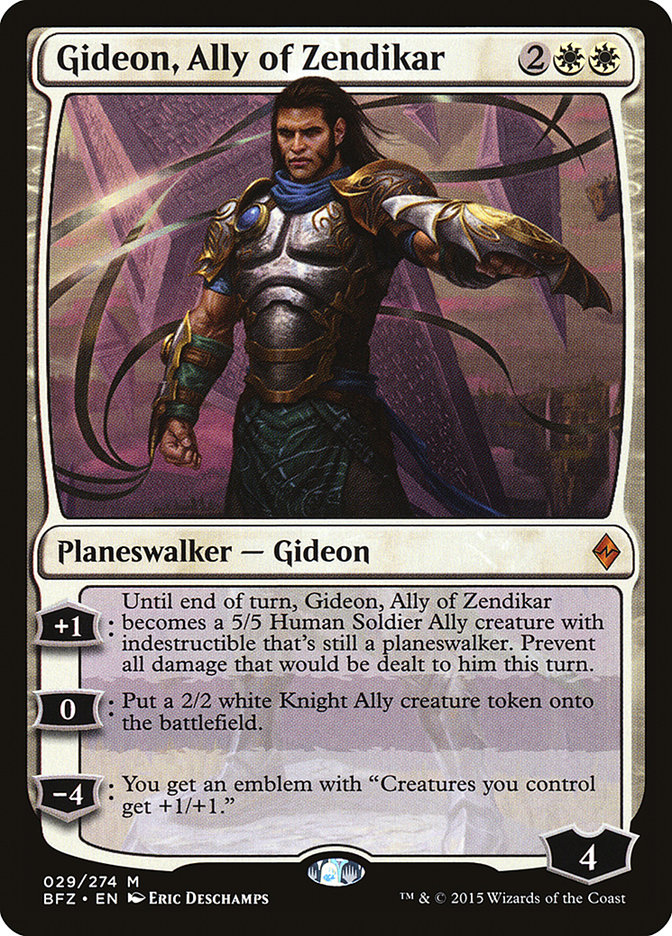
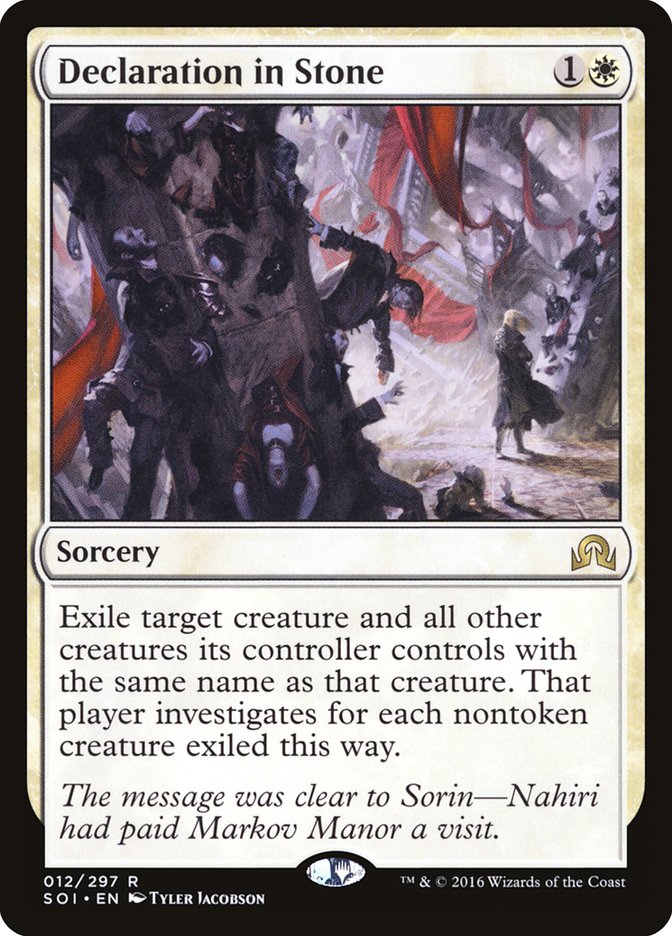
But Deathmist Raptor didn’t match up well against Reflector Mage; Gideon, Ally of Zendikar; or Declaration in Stone. It was at its best against removal-heavy control decks, which were pushed out of the metagame by the very green decks that Deathmist Raptor typified.
No one wants to confront the fact that their pet card may have seen its best days, but this fate will befall some cards from Battle for Zendikar and Shadows over Innistrad blocks. The sooner you break your attachment to these cards and make them re-earn their spot in your decks, the sooner you will arrive at an accurate picture of the upcoming metagame. So let’s look at a few staples of the previous Standard format that may be in for hard times in the coming months.
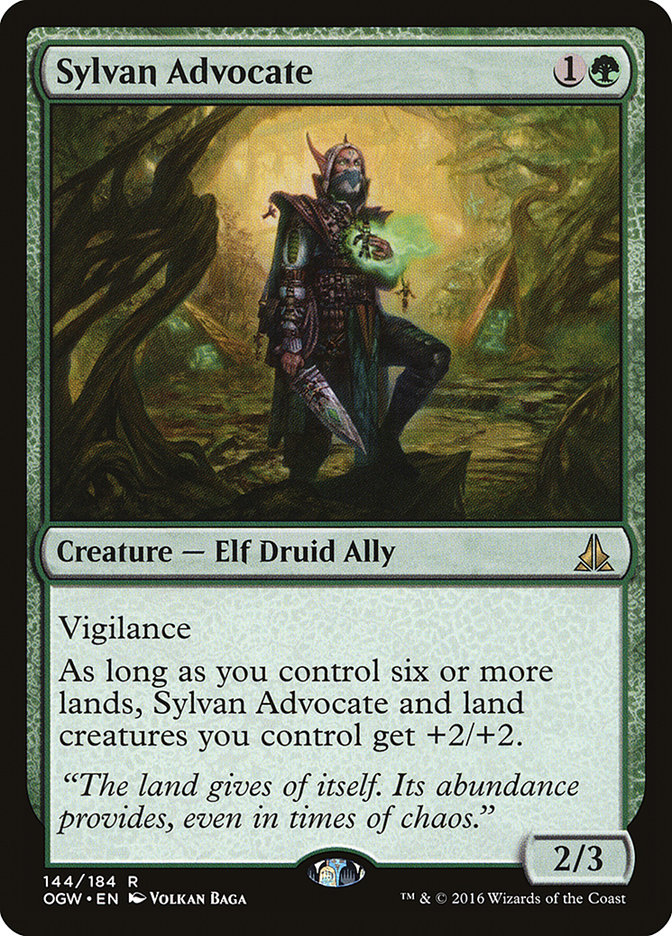
I’m starting with what is sure to be the most controversial selection. Since Sylvan Advocate was printed, it’s been an immediate staple, starting in Abzan decks and eventually pairing with Collected Company for months. This has been the best two-drop in Standard for more than half a year. It has great stats, plays offense and defense, and most importantly gets better as the game goes long. So what’s the problem?
Well, there is only so far that Sylvan Advocate can fall because its raw power creates a relatively high floor for its capabilities. But the bar it has set for itself over the last many months is incredibly high, and one that very few cards live up to for their entire Standard lifetime. And there are two reasons I see Sylvan Advocate falling from auto-include in nearly every green deck to role-player.
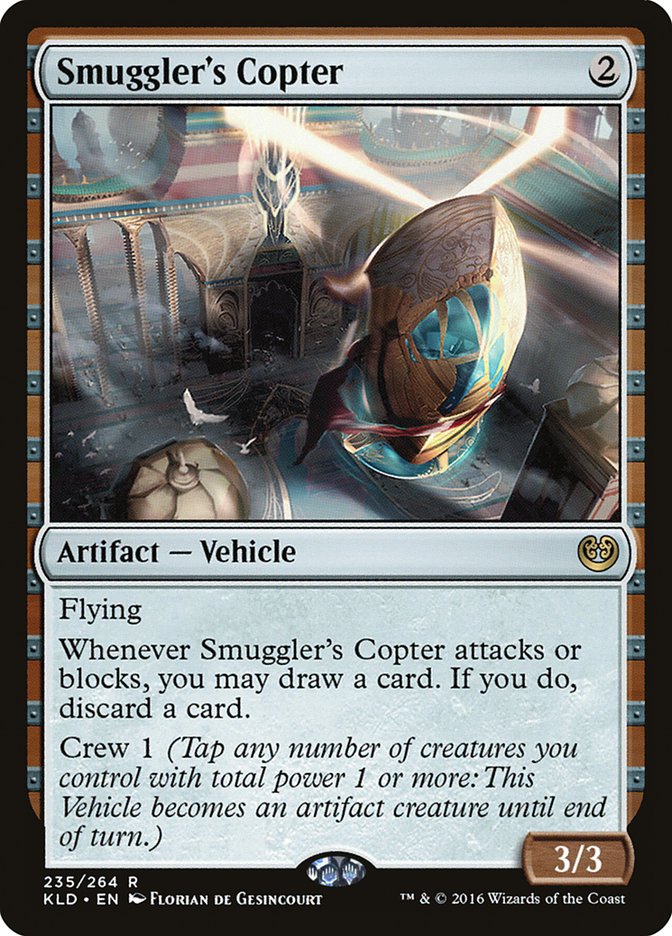
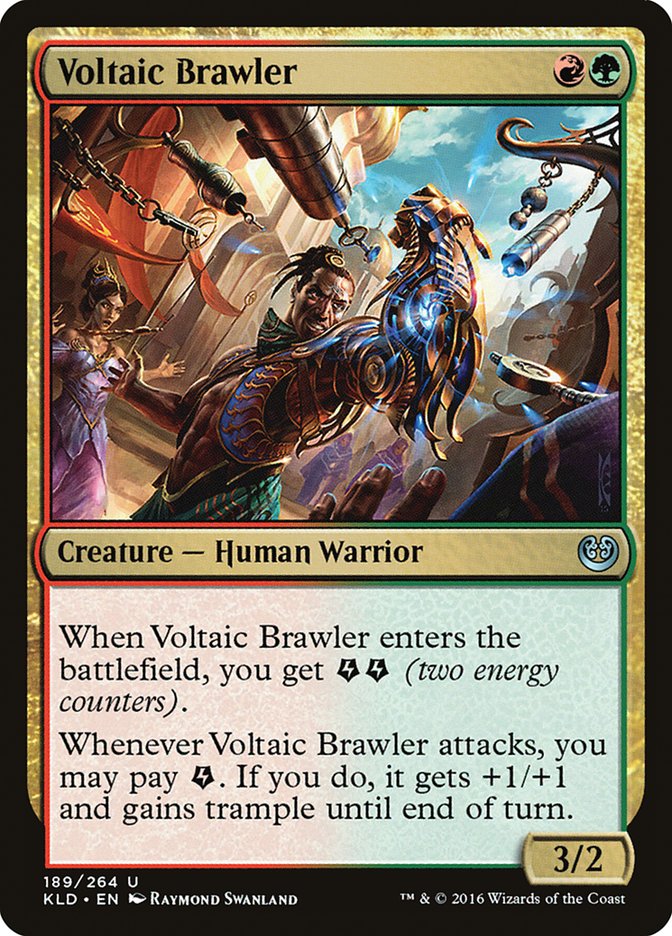
The first is that it doesn’t match up as well with the other early plays in Kaladesh. Smuggler’s Copter attacks right over it and wins against it in a race. Voltaic Brawler attacks right through it or at worst trades. Longtusk Cub when supported by any other Energy source also attacks right through it and then continues to scale up so it’s ready for when Sylvan Advocate makes the jump to Megazord mode.
Too many times in my early testing has Sylvan Advocate done little to stabilize the battlefield against the myriad aggressive creatures in Kaladesh. The previous Standard format revolved around 2/3s and small Humans. Sylvan Advocate effectively nullified those creatures and then outpaced them once you hit six lands. That is going to happen much less often, which means you should think harder about whether there is a better option for that slot on your curve.
Second, I think Sylvan Advocate is the biggest loser in the rotation of Dromoka’s Command. Vigilance creatures are ideal targets for pump effects, since they get to play both offense and defense. A 3/4 Advocate could dominate games, and a 5/6 was big enough to contain Gideon, Ally of Zendikar. In decks that can still reasonably pump Sylvan Advocate, say with Gideon, Ally of Zendikar or Nissa, Voice of Zendikar, it should still do good work, but outside of that the idea of playing a 2/3 vigilance should be less appealing that it used to be.
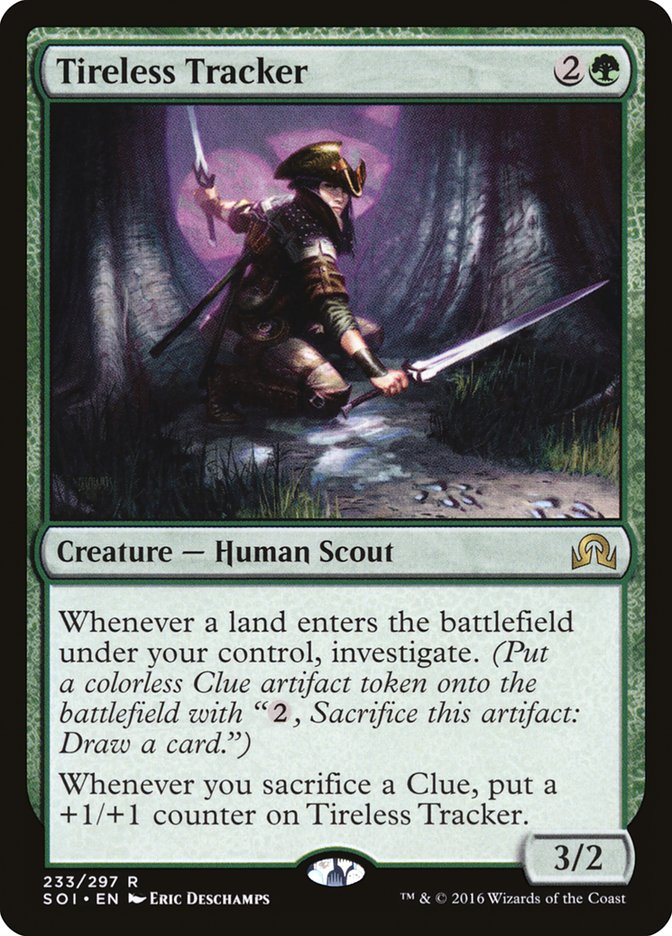
Okay, Ross. I was willing to believe you about Sylvan Advocate. After all, it’s just a creature. But Tireless Tracker draws cards! And it ensures that you never flood out! Ever! That’s just too good and you’ve lost the plot.
Maybe I have lost the plot, strange voice in my head. But perhaps you’re missing something. Something important: Kaladesh is a very aggressive set. Vehicles want to play with creatures to Crew them and they all attack for loads of damage. Aetherworks Marvel may look grindy, but really it’s just trying to summon giant monsters as soon as possible, and the rest of the more promising Energy cards are aggressive creatures.
After months of seemingly endless games where battlefields would become littered with creatures while both players raced to draw the most cards, Standard is about to get a speed boost. And that means that paying two mana to draw a card is a much dicier proposition than it used to be.
Think back over the last few months. You’re in a game and you’re ahead, but not by much. You’re gearing up for a long game as your opponent is likely to stabilize the battlefield with some combination of creatures and removal. They mull over their five-card hand for a second before cracking a Clue.
Instantly you know they are desperate and your lead is cemented. Even if they draw a good card, spending two mana on a critical turn without affecting the battlefield puts them in a huge hole.
You also fall behind by waiting on Tireless Tracker until turn 4 to ensure you “get value” from the card. A 3/2 on turn 4 in this format is not going to cut it, so you will often be forced to cast it on turn 3 and trade it off much more often than you used to. I don’t think I have to tell you that Warpath Ghoul is below the curve in Constructed.

Do you have any spare brains?
If you have enough cheap removal that you can afford to wait on this card, then it will still be effective, but that is a much narrower range than “decks with creatures and Forests.” Like Sylvan Advocate, I see Tireless Tracker being reduced to a role-player.
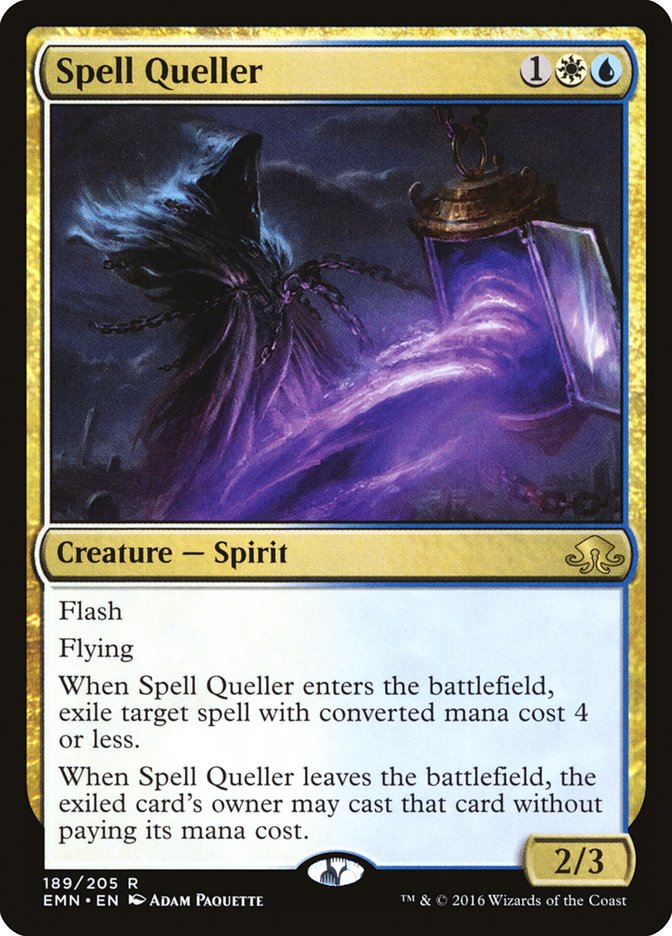
Ross, come on. I know Collected Company was bonkers, but that doesn’t mean every creature in the deck is now bad.
Well, Tireless Tracker and Sylvan Advocate transcended Collected Company, so I don’t group Spell Queller with them. Spell Queller was irrelevant outside of Bant Company, and even there it started to lose its stature at the end of the format with some players cutting it entirely.
Spell Queller is great when you’re applying pressure to your opponent and use it as a tempo spell to cement that early advantage, but it’s a huge liability when behind. If you try to hold up mana for it and your opponent plays around it, you fall further behind, and if you don’t, then it eventually has to be played for no value. So as the format speeds up, Spell Queller gets significantly worse.
Collected Company gave you not only a card that could find Spell Queller when you needed to counter a spell but also another instant-speed threat that you could use to squeeze your opponent. They could hold their spell to play around Spell Queller, but then they would be buried by Collected Company. Without that support, navigating around the flier is much easier.
Much like Sylvan Advocate, the 2/3 body gets worse, and Spell Queller doesn’t match up against the premier flying creature in the format, Smuggler’s Copter. That leaves you more dependent on the card advantage it can provide, Smuggler’s Copter also necessitates that players come prepared with cheap, instant-speed interaction. I foresee a lot of Spell Quellers falling victim to Harnessed Lightning in the first week or two of the format. Unless Spirit tribal decks become a major player, I think you’re going to see Spell Queller in the unemployment lines.
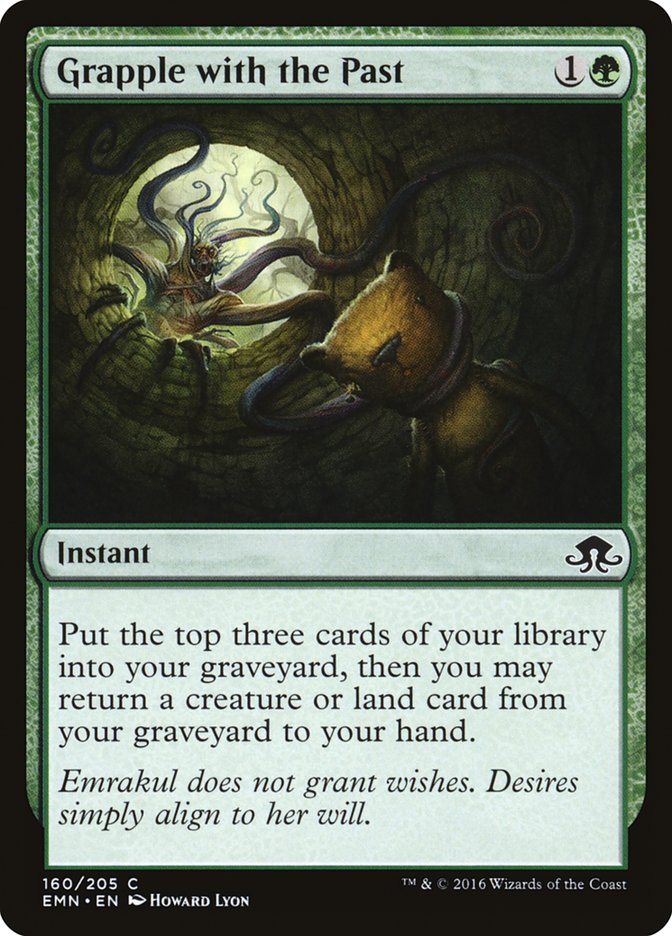
Finally, a non-creature. Grapple with the Past was the underdog of Eldritch Moon: an unheralded common that most players didn’t think twice about outside of Draft comes out of nowhere and helps to shape the format as a top-notch enabler for delirium.
And I do believe that the delirium cards still have a place in Standard. Emrakul, the Promised End is too powerful not to see play and Ishkanah, Grafwidow is excellent against aggressive decks. But the way we enable these cards has to change. You can’t rely on your big spells to catch you up from almost nothing because there’s a good chance you’re dead by time you get to cast them.
Bant Company was right in the sweet spot, whereas Humans was a bad matchup for these decks unless you could cast an early Kozilek’s Return. The new format is going to look a lot more like the latter than the former, which means we need to support delirium in ways that affect the battlefield.
Grapple with the Past is a great way to achieve late-game inevitability, which is why in the previous format it was often correct to hold it unless you absolutely had to. You will not have that luxury as often in the new format, and overloading on a card that will often be a Lay of the Land is not something that excites me.
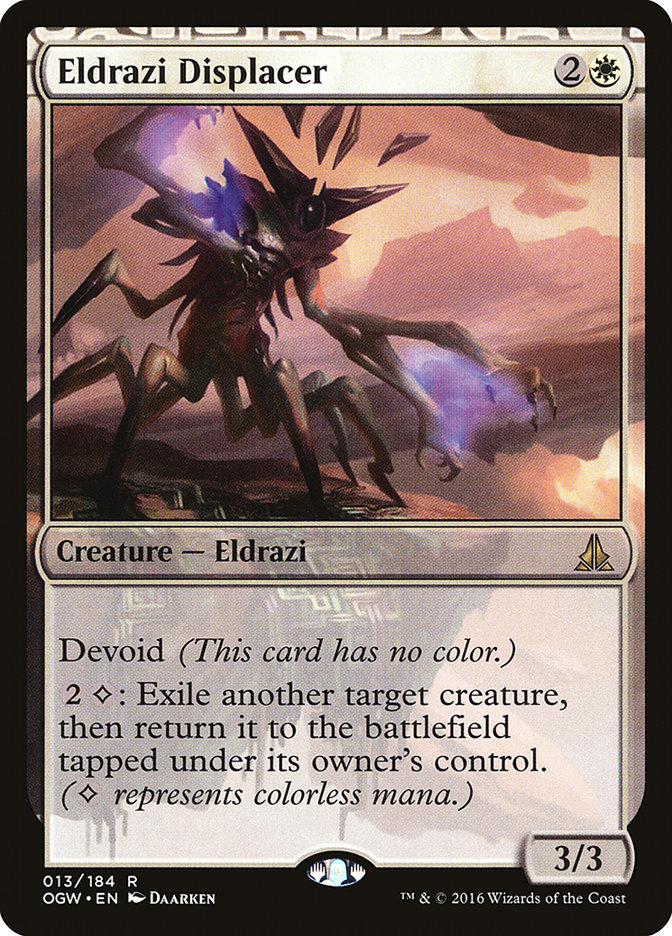
Eldrazi Displacer was a solid role-player in the format. A card that had the potential to take over games while still being relevant early, it was great in Collected Company mirrors or against G/W Tokens. But the cost of adding it to your deck was steep. Three-color decks were already dicey and adding colorless-specific mana to your deck didn’t help things.
Fortunately for Eldrazi Displacer, the painlands were there to act as three-color lands. A single Evolving Wilds for Wastes would give you enough sources to use Eldrazi Displacer effectively without hurting you too much. Now they are gone and all that exists in their stead is Aether Hub.
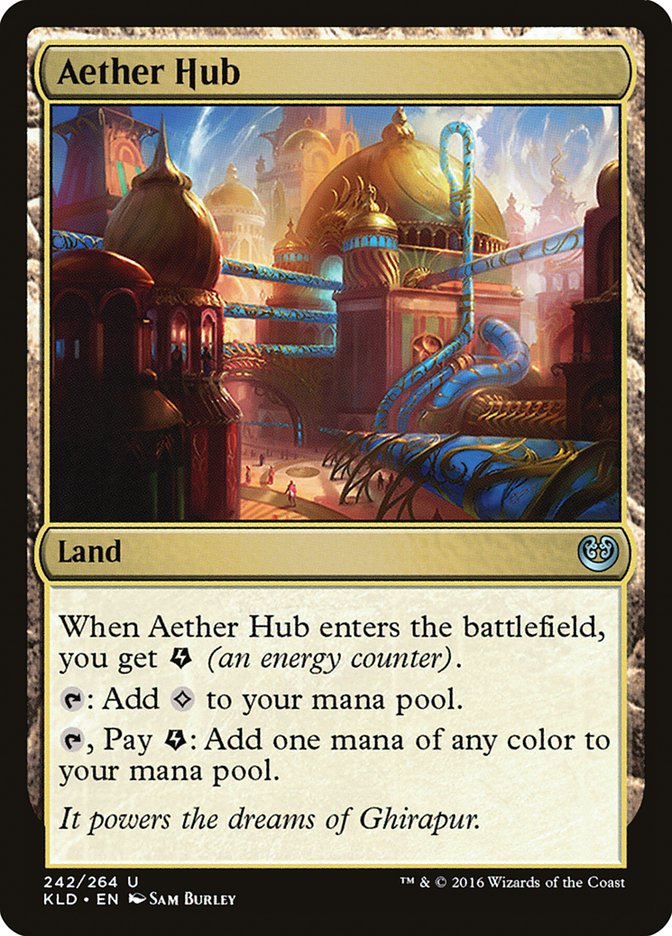
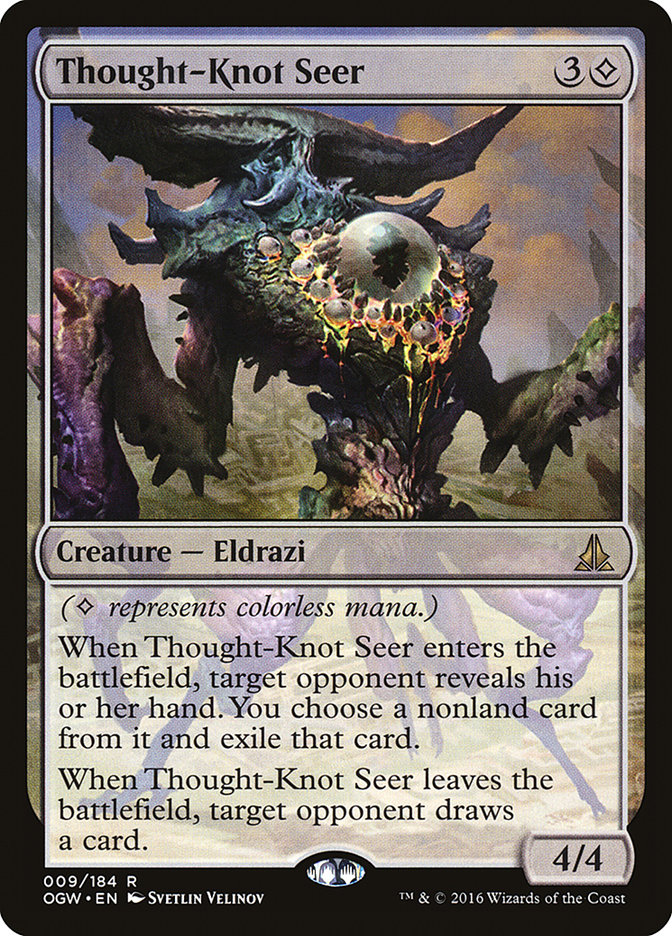
Aether Hub is a great card and I expect it to see significant play, but it’s a poor facsimile for a painland when it comes to splashing Eldrazi. Thought-Knot Seer and Reality Smasher seem to have the same issue, but they weren’t nearly as popular off the splash as Eldrazi Displacer was. For the most part, those cards came as a package in dedicated colorless decks, most of which only had one true color so they could play a number of colorless utility lands. Eldrazi Displacer still fits nicely into decks like that, but the days of locking your opponent out with it and Reflector Mage are likely gone.
The mana in a format is crucial because it often outlines what is and what isn’t possible. The creatures and spells are full of promise as we imagine what they can do at their best, but no card achieves its full potential without help, and that help most often comes from mana sources.
After a year of Collected Company, it’s easy to forget just how dynamic Standard has been in recent years. Change is the only constant, and clinging to outdated knowledge is the easiest way to be left behind.
I understand that it’s much harder to start from scratch and rebuild your knowledge of the format with a fresh perspective, but hey, if it wasn’t hard, it wouldn’t be Magic.