

Pro Tour Kaladesh was one of the more interesting tournaments in recent memory. Comparisons were made to Modern, with decks bearing similarities to Infect, Dredge, Burn, and Goryo’s Vengeance. The winner at the end of the weekend?
A control deck, which is the first time that’s happened in a while. In this instance, it was a pseudo-mirror in the finals.
Let’s start with the elephant in the room.
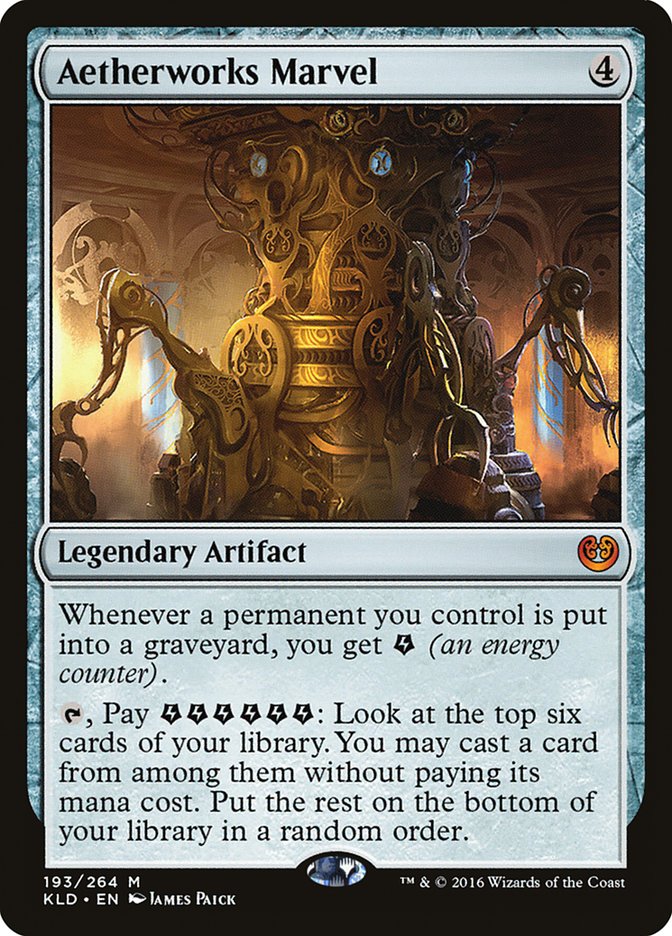
On the surface, casting an Emrakul, the Promised End or Ulamog, the Ceaseless Hunger on turn 4 seems like the best thing to be doing in the format. That’s probably what lead to over 20% of the field, including several big teams, playing the deck. However, they didn’t fare well. Yes, Matt Nass made Top 8, but the deck also had several 6-4 (or worse) records with pilots we are used to seeing put up better results.
What was the reason for the crash and burn?
The hate was out in full force, with many players opting to splash sideboard cards like Ceremonious Rejection. Still, I think the biggest reason for the failure of the Aetherworks Marvel deck as a whole is its general inconsistency. You “get it in good” a high percentage of the time, but ultimately you’re still at the mercy of your own deck. You could resolve Aetherworks Marvel, miss, and die on their next turn. This format can be very unforgiving. You might draw too many Eldrazi, and your odds of hitting off Aetherworks Marvel go way down. You could never draw Aetherworks Marvel because they’re hiding out on the bottom of your deck.
There are still other situations where you hit a re-draw off your first Aetherworks Marvel activation, and you still have time to untap and try again. As the format moves forward, you can’t necessarily expect to have that sort of luxury. Some of the best-performing white or red aggressive decks weren’t the midrange-feeling W/R Vehicles but more aggressive builds with Reckless Bushwhacker and/or twelve one-drops.
There are some ways to fix the issues. A fair warning, though: these “solutions” don’t mean the deck is broken.


Creatures (13)
Planeswalkers (3)
Lands (23)
Spells (21)
Creatures (13)
Lands (23)
Spells (24)
- 2 Hedron Archive
- 2 Nissa's Renewal
- 2 Descend upon the Sinful
- 3 Vessel of Nascency
- 4 Aetherworks Marvel
- 4 Woodweaver's Puzzleknot
- 3 Glassblower's Puzzleknot
- 4 Attune with Aether
Sideboard
Both of these decks are conscious of the mirror match and the flaws inherent in Temur Aetherworks. These decks have “soft” hits for Aetherworks Marvel such as Descend upon the Sinful, Drowner of Hope, and Tamiyo, Field Researcher. If you can’t find Aetherworks Marvel or your opponent stops you from resolving one, you can win through other means. In Yuuya’s case, his maindeck cards assist in a transformational sideboard plan into basically a Bant Company deck.
Yuuya’s maindeck Spell Quellers are genius. They give you a huge edge in the mirror, as they can’t be countered by Dispel, Negate, or Ceremonious Rejection. The removal spell of choice, Aether Meltdown, is no help. Going forward, I imagine most players to adapt to the threat of Spell Queller, but for Pro Tour Kaladesh, Yuuya had a huge edge.
Descend upon the Sinful is a nice way to catch up, whether or not Aetherworks Marvel is involved. It’s a clever way to clear the battlefield and still contest opposing Vehicles, assuming you can hit delirium. In this deck, it’s not very difficult.
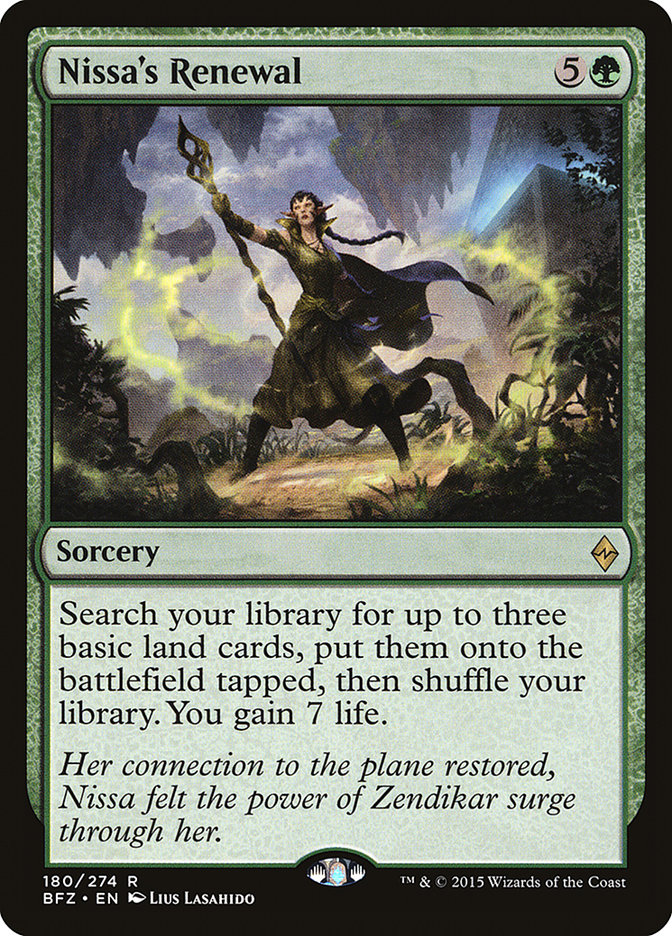
I don’t like Adam’s Hedron Archives and Nissa’s Renewals, but it’s clear that he plans on hard-casting his Eldrazi if things don’t quite go as planned. Given how likely it is you don’t find Aetherworks Marvel, it doesn’t hit, or you can’t resolve it through disruption, building your deck like these two have could be the logical next step.
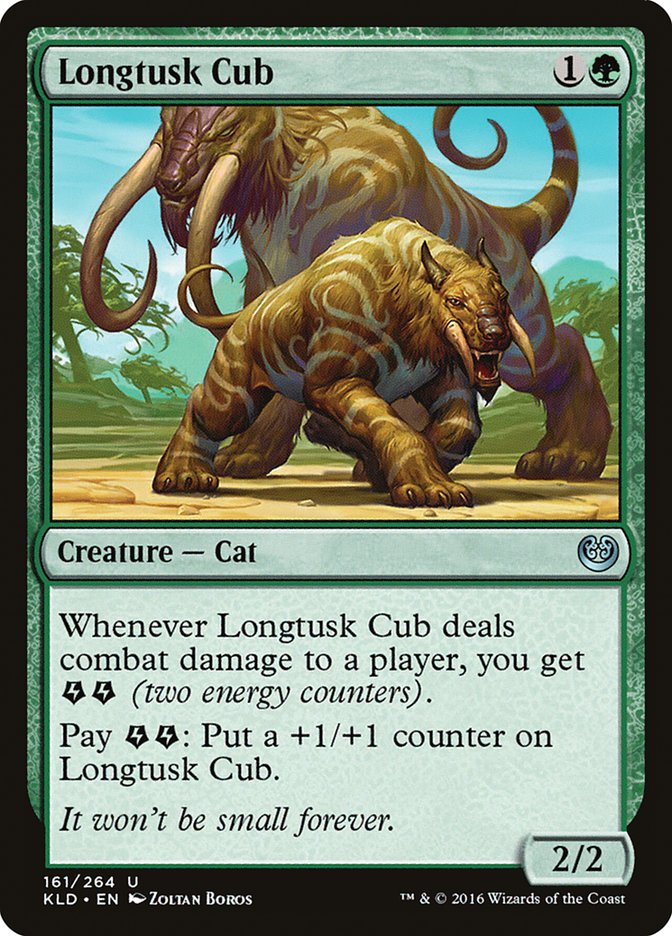
Longtusk Cub is underrated so far. It attacks and blocks well, gives you Energy, and is another outlet for excess energy. I like it. If you’re trying to transition into a beatdown deck, I would start with Longtusk Cub.
I’m not going to lie; I’m dreaming up ways to make the sort of combo/control deck that will ultimately draw comparison to the Dark Depths / Thopter Foundry deck. Realistically, that’s not going to happen.
It’s worth noting that by trying to make your deck better and improve the perceived flaws, you might end up with a weaker deck as a whole. You won’t have many feel-bad moments while you draw Eldrazi after Eldrazi and fail to get anything going, but you might also lose more matches with Yuuya’s deck in the long run because you’re not doing inherently broken things. Sometimes you’ll spike that Emrakul, but sometimes you’ll hit a Spell Queller in your main phase. Meanwhile, you can’t wait to fire up the Aetherworks Marvel again next turn. It could be anything!
(Even nothing.)
At Pro Tour Kaladesh, Aetherworks Marvel was probably the worst-kept secret in quite some time. Everyone seemed to be ready, and the people who chose to play it mostly paid the price for that. That, and when their deck didn’t seem to function.
So what did I play?
I went with B/R Zombies, AKA Dredge. My matchups against Aetherworks, W/R, Metalwork, and G/R Energy all felt solid, but I wasn’t really annihilating anyone except the various control decks. Given the way the tournament played out, maybe I would have had a shot if I hadn’t 0-3ed my draft. As it stood, I only played one match (where all my creatures got Incendiary Flowed) before dropping.
I wasn’t exactly dead last, but I was close enough.
Creatures (22)
- 4 Prized Amalgam
- 2 Insolent Neonate
- 4 Voldaren Pariah
- 4 Haunted Dead
- 4 Cryptbreaker
- 4 Scrapheap Scrounger
Lands (23)
Spells (15)
I didn’t like the mana of the three- or four-color versions and also thought Voldaren Pariah was lining up to be better than Elder Deep-Fiend in the format anyway. As it turns out, I was probably wrong about that. At the very least, it wasn’t as clear-cut as I thought.
The manabase was mostly good, and despite there being a lot of different directions to go with Prized Amalgam decks, I kept it relatively simple. If I would do it all over again, I’d change a decent number of cards around, but I could see playing the same deck again.
With Carlos’s and Shota’s red splashes for Radiant Flames, the control matchup is no longer a bye, but I assure you it’s still quite good. If control ends up taking off, then B/R Zombies (or something similar) could be an excellent option.

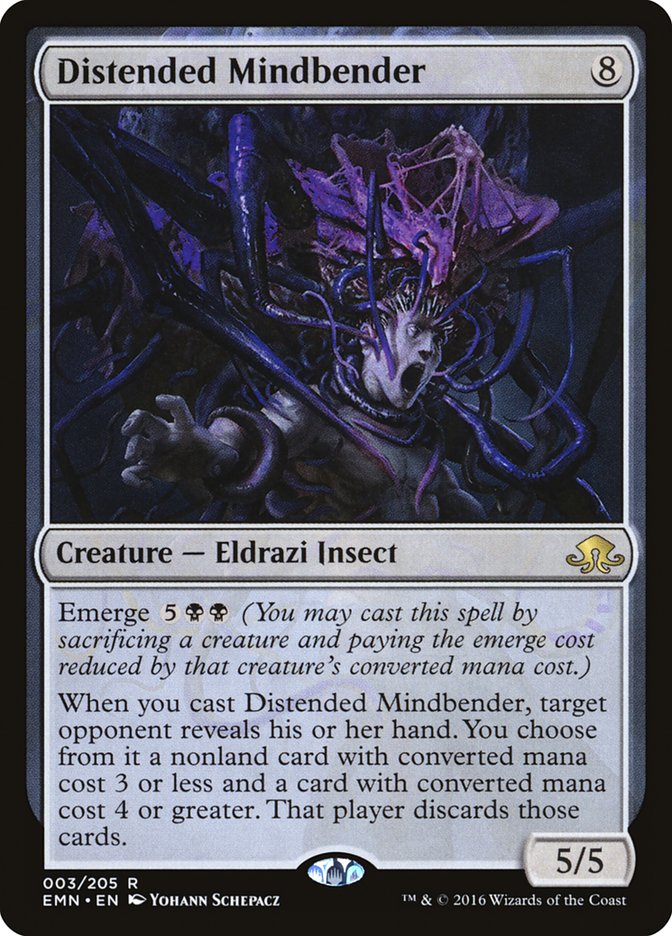
Going forward, you can tone down on some of the hate for G/R Energy and potentially shave some Voldaren Pariahs for Distended Mindbenders to have some maindeck disruption.
As for the sideboard, you want Distended Mindbender and Transgress the Mind for control and combo, Collective Brutality for red and/or white aggro and G/R Energy, To the Slaughter for G/R Energy and control, and Bloodhall Priest to have an additional threat against aggro and control. If you expect different amounts of those decks than I did (and you should probably should), you can adjust as necessary.
Bloodhall Priest was the card that kind of tied the various sideboard plans together.
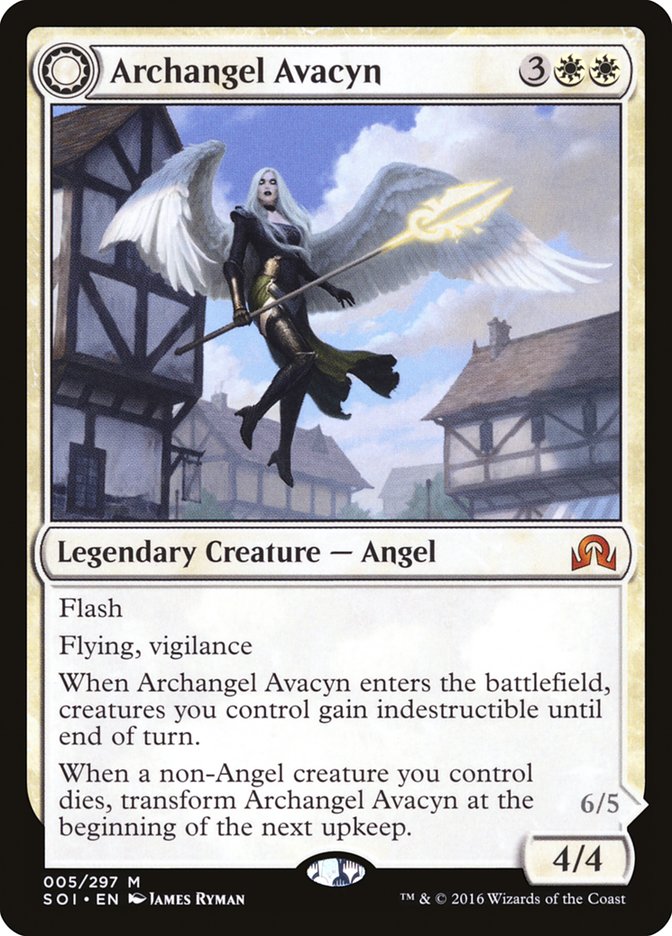
W/U Midrange (or Flash, but it’s not really a Flash deck) was quietly the best-performing deck of the Pro Tour. It was the only deck among the 9-1 finishers, which is more than a coincidence.
Creatures (23)
Planeswalkers (4)
Lands (25)
Spells (8)
Each list shared the same 40 or so cards, so you’ve got some room to tinker with. I prefer maindeck counterspells, less Declaration in Stones, and maybe less Rattlechains.
I’m scared that this deck is a tad too underpowered, though. I mean, Rattlechains against Toolcraft Exemplar and Archangel Avacyn against Aetherworks Marvel? Those don’t look like fair fights. It seems like W/U Midrange is going to have a very difficult time in Game 1 if it doesn’t draw the right half of its deck.
I’d rather beat down.
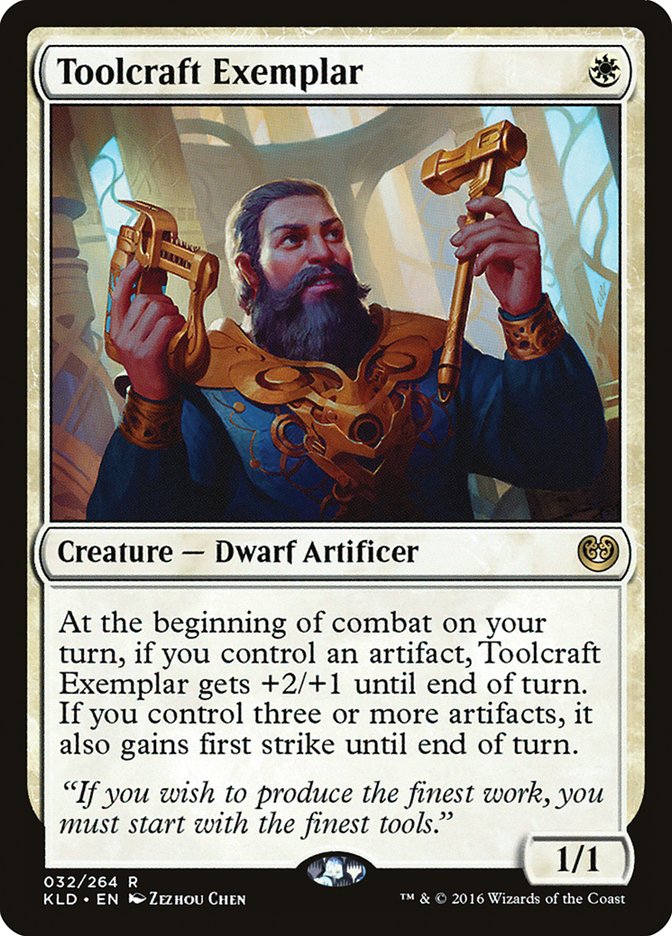
Toolcraft Exemplar is the hardest working one-drop in the format.
Creatures (23)
- 4 Thraben Inspector
- 3 Depala, Pilot Exemplar
- 4 Scrapheap Scrounger
- 4 Toolcraft Exemplar
- 4 Inventor's Apprentice
- 4 Veteran Motorist
Planeswalkers (2)
Lands (22)
Spells (13)
Lee’s deck is great, even if I’m not too keen on the specifics.
Do you want Depala, Pilot Exemplar and Veteran Motorist? Is Unlicensed Disintegration good enough? Is Cultivator’s Caravan playable in this deck? Can you get away with sideboarding Galvanic Bombardment without having a source of card advantage (see: Weaver of Lightning) to complement it?
Either way, Scrapheap Scrounger is great, and so is playing Toolcraft Exemplar alongside Inventor’s Apprentice. Splashing Ceremonious Rejection is a great call, even if it means you have to play Cultivator’s Caravan in your 75 to do it.
White-based aggro decks look great, including Lee’s and Makis’s W/R Tokens.
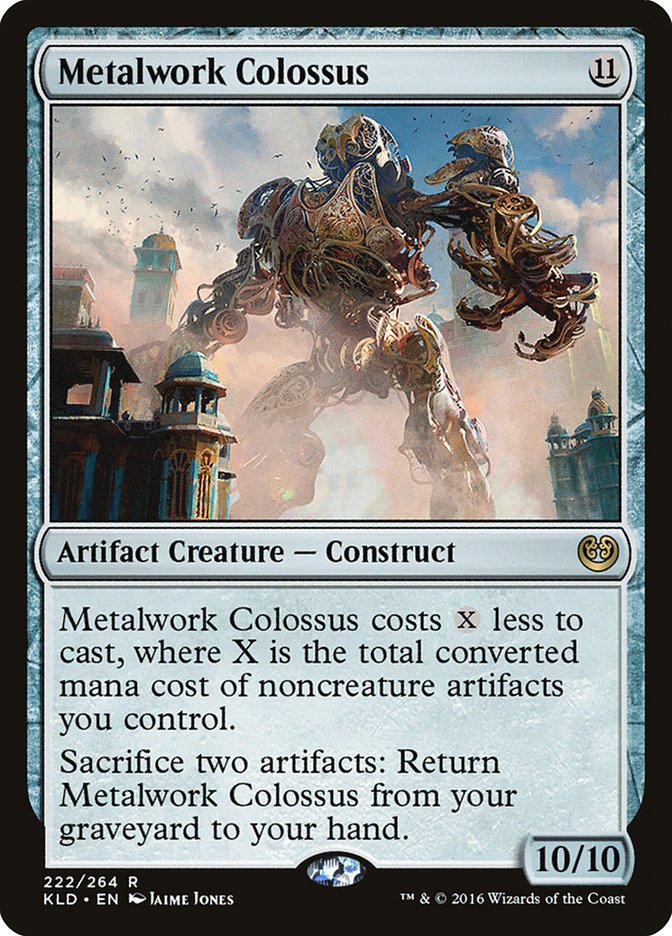
Is this the best deck that flew under the radar?
Creatures (14)
Lands (23)
Spells (23)
- 4 Prophetic Prism
- 2 Hedron Archive
- 3 Blessed Alliance
- 3 Skysovereign, Consul Flagship
- 3 Metalspinner's Puzzleknot
- 1 Key to the City
- 4 Cultivator's Caravan
- 3 Fumigate
Sideboard
Creatures (9)
Lands (23)
Spells (28)
Neither of these decks had awe-inspiring performances, but as Michael Majors noted, they pegged the metagame wrong. Perhaps now that the metagame is known, they can tune their flex slots to solve the problems that actually need solving.
Maindeck Radiant Flames isn’t out of the question here, nor is hybridizing these decks to include Aetherworks Marvel. Maindeck Ceremonious Rejection (or Negate) could fight the bad matchups, mostly by having some counterplay to Void Shatter and opposing Aetherworks Marvels.
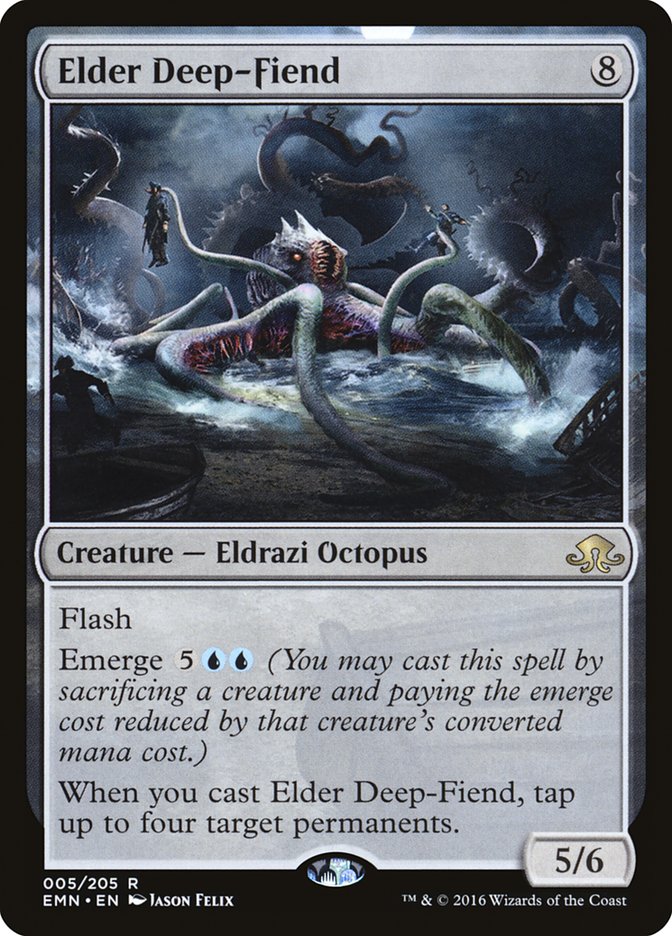
What is Elder Deep-Fiend’s place in all of this? It shows up in some spots, like in the Metalwork Colossus deck, but is there a viable deck where it’s the lynchpin?
Creatures (24)
- 4 Pilgrim's Eye
- 4 Reflector Mage
- 1 Archangel Avacyn
- 4 Thraben Inspector
- 3 Elder Deep-Fiend
- 4 Filigree Familiar
- 4 Glint-Nest Crane
Planeswalkers (2)
Lands (24)
Spells (10)
I played against a similar deck in my video this week, and it looked sweet. That said, I’m not sure it’s any good. There’s a pile of mopey creatures, some situational removal spells you hope line up well, and some heavy hitters on the top end.
Again, I can’t see myself playing this over a Toolcraft Exemplar deck.
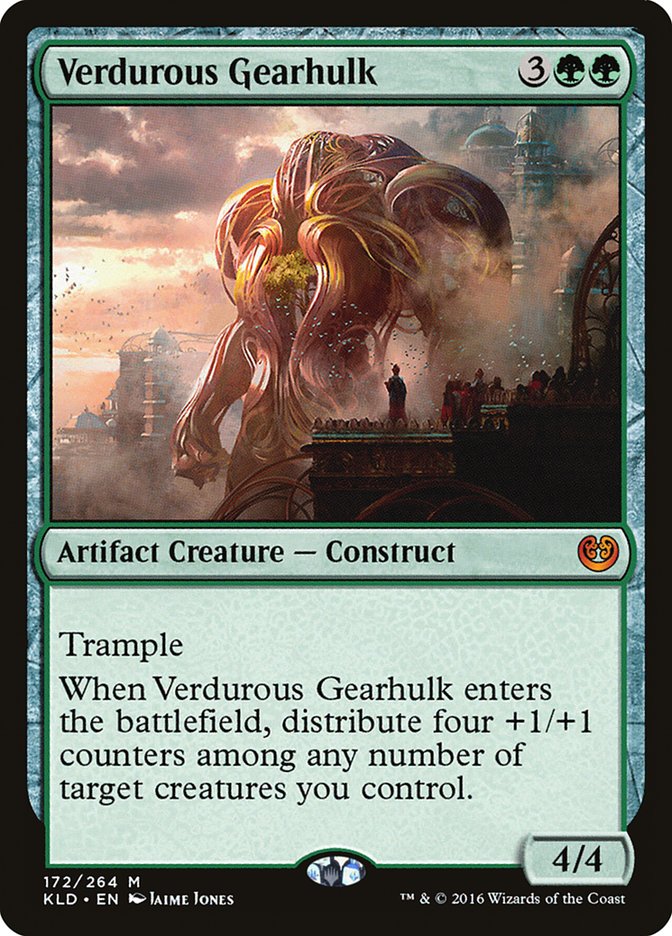
Some people just want to do very fair things. If Pro Tour Kaladesh was like Modern, then playing Verdurous Gearhulk was like playing Thragtusk. It doesn’t make a ton of sense when you look at the format as a whole, but there are definitely people who can’t beat it.
Creatures (23)
- 4 Catacomb Sifter
- 4 Eldrazi Skyspawner
- 3 Sylvan Advocate
- 4 Thought-Knot Seer
- 4 Verdurous Gearhulk
- 4 Servant of the Conduit
Planeswalkers (1)
Lands (24)
Spells (12)
Maindeck Thought-Knot Seer and Ceremonious Rejection seems like it was accidentally a great choice for the Pro Tour. Sylvan Advocate and Nissa, Vital Force strike me as odd choices, but the rest of the deck is kinda great.
It’s unclear whether or not this is better than EFro’s B/G Delirium deck, but both decks are trying to do basically the same thing, and both were quite successful. EFro did say he wanted more ways to play turn 4 Verdurous Gearhulk, and Takao’s deck one-ups him with Eldrazi Skyspawner and the consistently great splash for Ceremonious Rejection.
Creatures (22)
- 4 Catacomb Sifter
- 4 Kalitas, Traitor of Ghet
- 2 Gnarlwood Dryad
- 4 Grim Flayer
- 4 Verdurous Gearhulk
- 4 Servant of the Conduit
Planeswalkers (1)
Lands (23)
Spells (14)
EFro’s deck is great in its simplicity and complete disregard for traditional numbers. Two Gnarlwood Dryads with no more in the sideboard? Four maindeck Kalitas, Traitor of Ghet with only three removal spells?!
As is the norm at this point, Sylvan Advocate is complete absent. It doesn’t line up well against many creatures in the format, and the games don’t last particularly long. Instead, you attempt to pummel people with Verdurous Gearhulk.
It was mentioned on stream that EFro didn’t think his Aetherworks Marvel matchup was good, yet he kept beating it as their decks failed to do anything. He didn’t give them much time to assemble their pieces either.
If you want to play a midrange-y delirium deck in this format, this is the best shot you’ve got. In Game 1, you’re all business, and you can become a more controlling deck in Games 2 and 3 if the matchup dictates it.
Shota’s deck might be what gets me to sleeve up a control deck in Standard again. His deck looks nice. It also happens to contain Thing in the Ice, Radiant Flames, and Painful Truths, all cards that I’ve cast in Modern.
Creatures (6)
Planeswalkers (1)
Lands (26)
Spells (27)
His deck seems like one of the few decks from the Pro Tour that doesn’t have to take a step back, look at the metagame, and hastily change ten cards to match what’s going on. He basically nailed it.
The only thing I would consider changing off the bat is Scatter to the Winds over Void Shatter. With Ceremonious Rejection creeping up in more spots, especially in some maindecks, I wouldn’t want to enter a counter war and have to worry about it. Exiling a spell is relevant, likely more often than using awaken would be, but they are both marginal.
If you decide to register Shota’s deck, do yourself a favor and study up. Watch his matches from the PT and try to figure out why he’s doing what he’s doing. Compare that to what you would have done. Get some reps in with the deck.
You can copy the Pro Tour-winning deck, but you can’t copy Shota’s mastery. The best you can do is hope to imitate it.