

In a couple of short days, we’ll have the first major individual Legacy tournament since the banning of Sensei’s Divining Top as the absurd triple Grand Prix fiesta kicks off in Las Vegas.
Brief aside: Why are these marquee Las Vegas events always in June? I would pay twice as much money to have them in January. I’m struggling with the heat in Roanoke right now, and even though the lack of humidity in the desert helps, I’m putting the odds of my death this week at about 0.1%. People should not live in deserts. We’re defying nature and it should stop.


Thanks for reading SCG Premium.
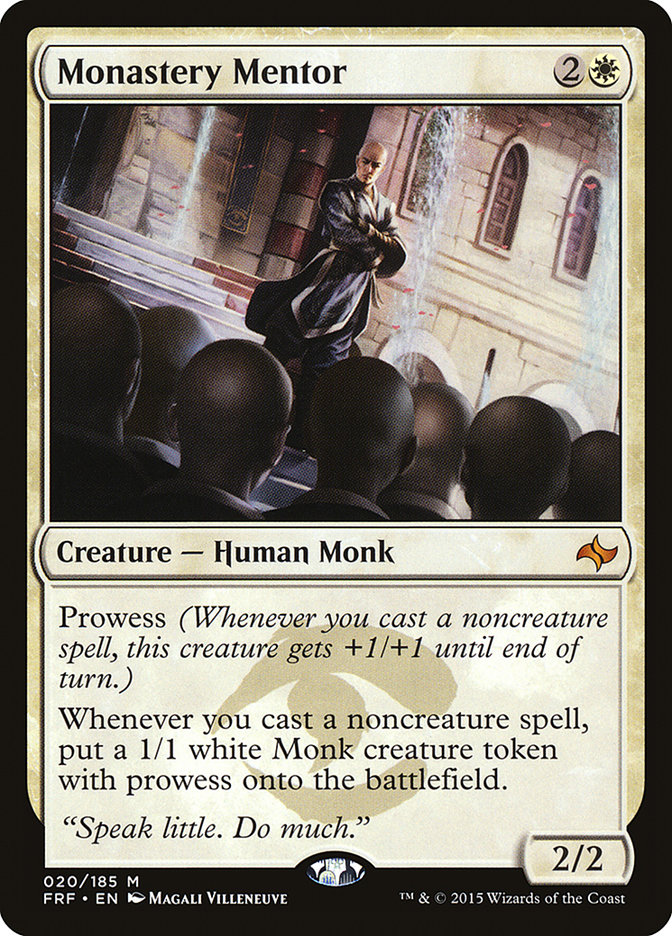
Without the pressure of consistent SCG Tour events on the Legacy metagame, the format has remained mostly stagnant since the printing of Monastery Mentor and the subsequent emergence of Miracles as the default best deck. The entire format seemed to revolve around the centrality of Miracles and combating Sensei’s Divining Top, Counterbalance, and Terminus.
Legacy is large and varied enough to allow for archetypes that were soft to Miracles to compete, but it was clear that those decks would not last long were Legacy to be iterated as often as it was a few years ago.
The removal of Sensei’s Divining Top leaves a significant vacuum in the Legacy metagame for the first time since Dig Through Time and Treasure Cruise were removed in the same year. In preparation for #GPVegas, here are my expectations for the metagame that we’ll see later this week.
The New Default
Grixis Delver Spencer Garnier
While the European metagames have typically been more exotic, we Americans tend to stick with powerful blue cards in a shell that can be aggressive or defensive, depending on what the situation dictates. That has meant Delver of Secrets for many years now, and I don’t see that changing anytime soon.
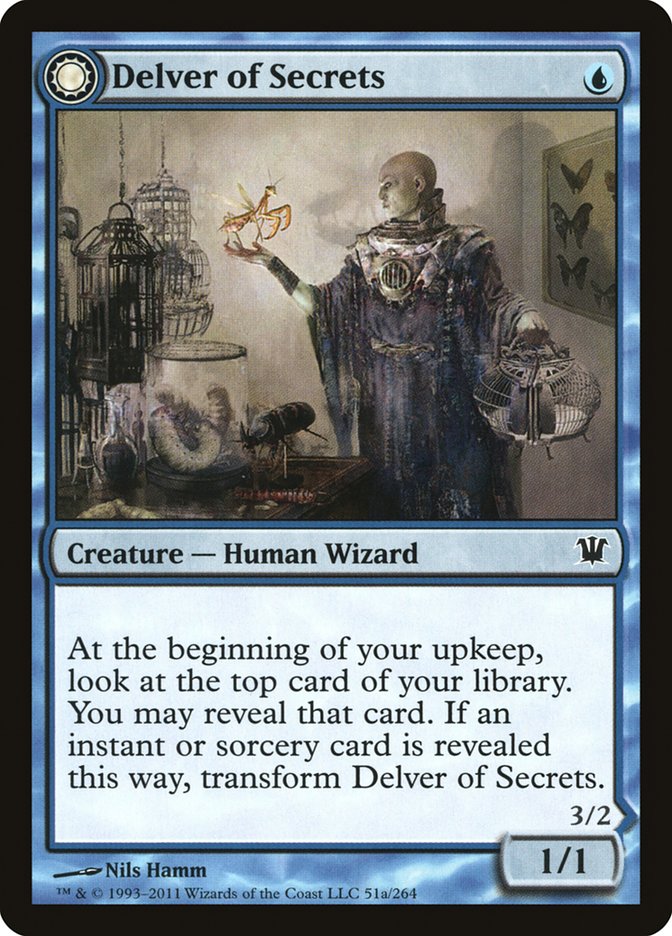
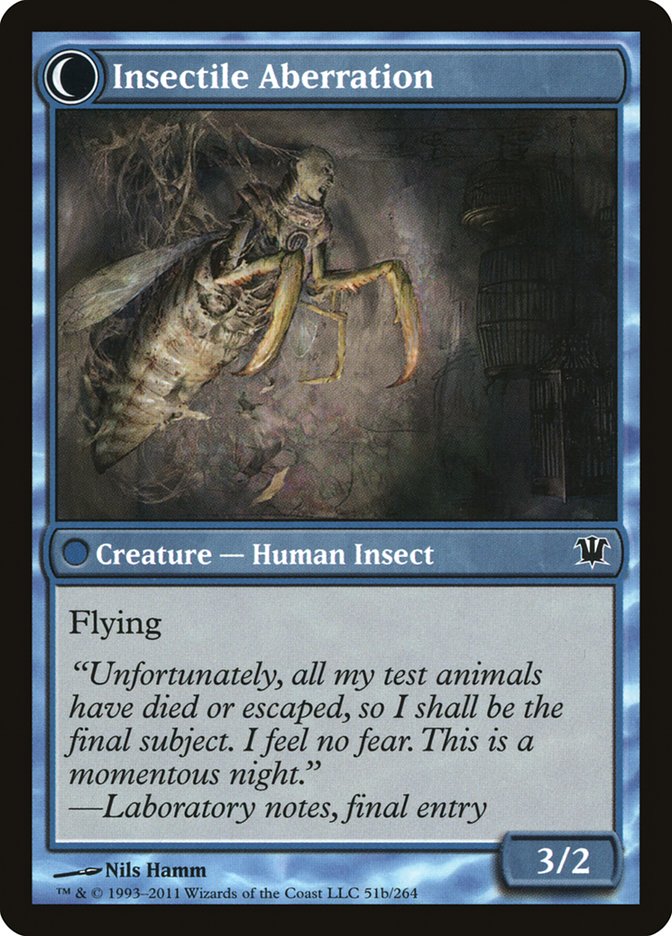
Delver maintained a significant presence in the format in the face of Miracles and will assume the top spot again after the previous bogeyman has left. Toward the end of the format, we saw a move toward Delver-less blue decks like the deck Reid Duke used to win Grand Prix Louisville, and if the metagame is especially flush with Delver decks, a list similar to Reid’s could be well-positioned, but I think the bulk of the fair Brainstorm players will be playing Delver of Secrets for one very important reason: the return of combo in full force.
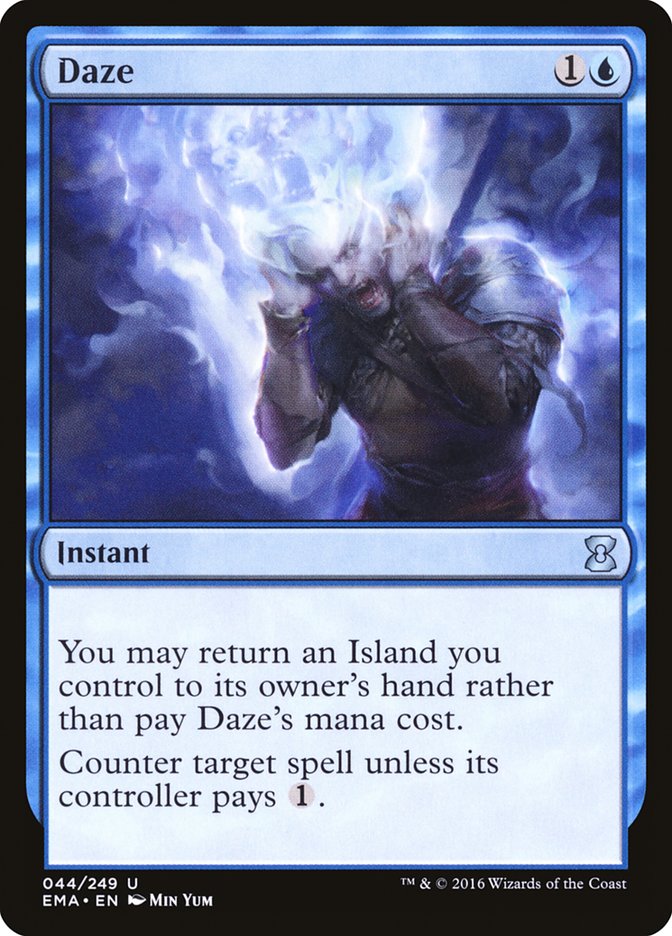
The difference between Delver decks and Blue Control decks in Legacy is almost entirely in the presence of Delver of Secrets and Daze over more robust cards. This pair is a nod to the speed of many decks in Legacy, yet is a liability in the pseudo-mirror between these similar archetypes. The two cards are also not ideal against Miracles, which is why the move to bigger blue decks in Legacy before the Top ban made sense. The pair is at their best against combo decks, where pressure backed by disruption is the formula for success.
But combo decks were already hampered by a metagame where Miracles was the top deck, as the Sensei’s Divining Top / Counterbalance Combo is excellent and the addition of Monastery Mentor meant you couldn’t as a combo player sideboard into a slower strategy, draw your Abrupt Decay, and go off after sculpting an ideal hand. With this predator removed from the environment, combo decks are free to return and feast on anyone expecting to play fair, attrition Magic.
Legacy is about to speed up, so the more one-mana threats and free counterspells, the better. In a few months, when combo decks are on the downswing, then it will be a good time to go big with your fair blue decks, but for now it’s time to go small.
C-C-C-Combo!
On to my favorite part, the degenerate answer-me-or-die decks. After my long-term relationship with Elves ended with adifficultbreak–up, I’ve found new love in the Tendrils of Agony…okay, that didn’t come off exactly how I expected, but you catch my drift.
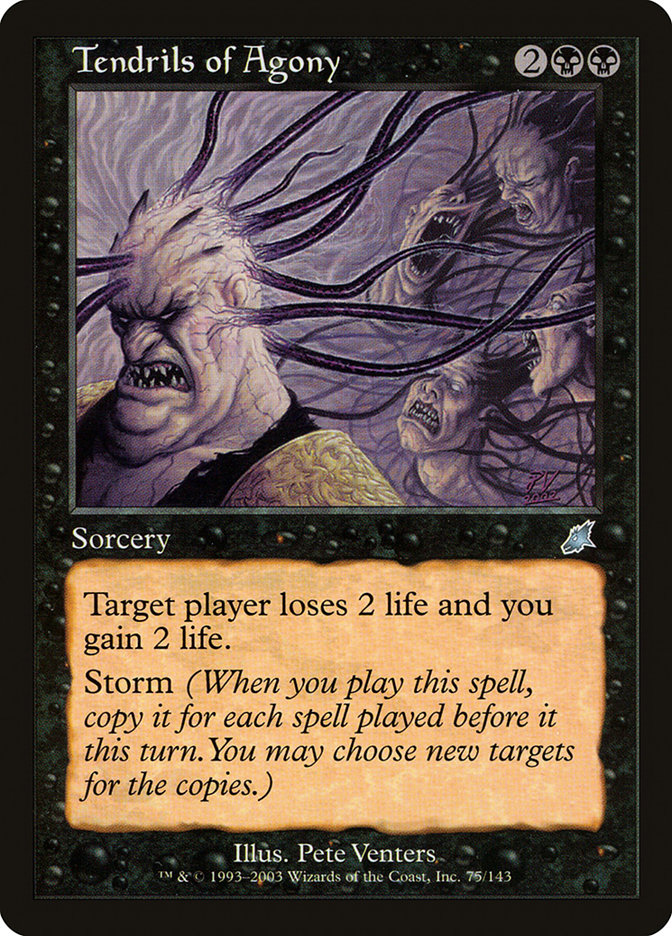
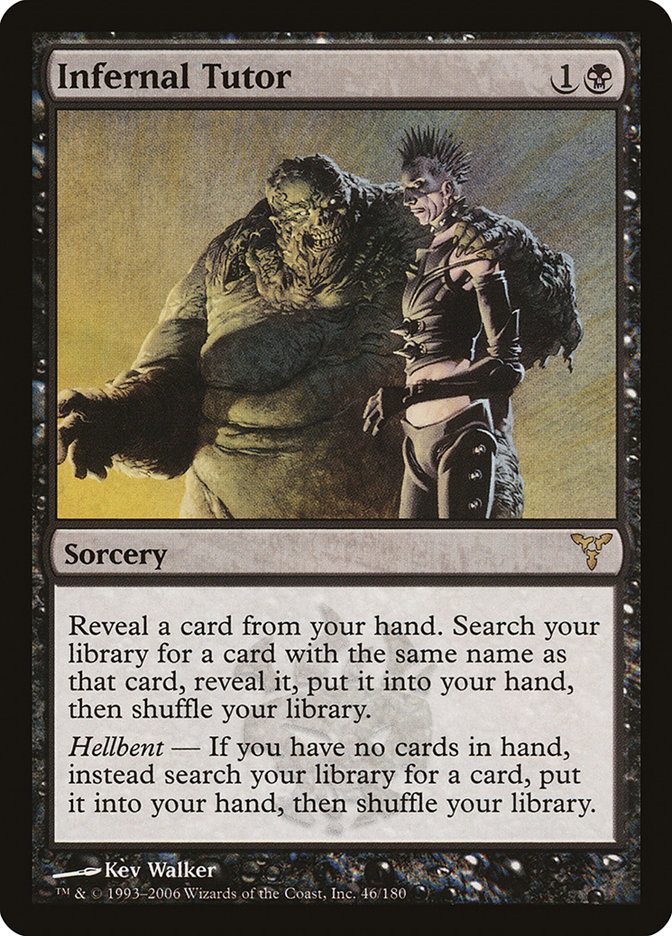
Storm is my baby now, and the above dynamic of Monastery Mentor giving Miracles a clock perhaps hurt Storm the most, because it was well-poised to play a long game with Abrupt Decay, discard spells, and plenty of cantrips to find them.
Grixis Delver certainly has good tools against Storm; in particular, the combination of Cabal Therapy and Force of Will is potent because it represents two distinct axes of disruption. Yet that matchup is, in my admittedly biased opinion, slightly favorable for Storm. Also, the removal of Counterbalance means that Storm can move away from the green splash in the sideboard for other options. This is where I am right now, although it’s far from locked in:
Ad Nauseam Tendrils Ross Merriam
With the space freed by removing green cards, the sideboard still has a defined plan against the remaining Chalice of the Void decks (Hurkyl’s Recall plus Chrome Mox to go under them), but now has cheaper answers to the various annoying creatures around and a significant amount of graveyard hate against one of the other top combo decks in the format, Reanimator. The cost is the loss of Xantid Swarm, which is replaced by the worse, but still effective, Defense Grid.

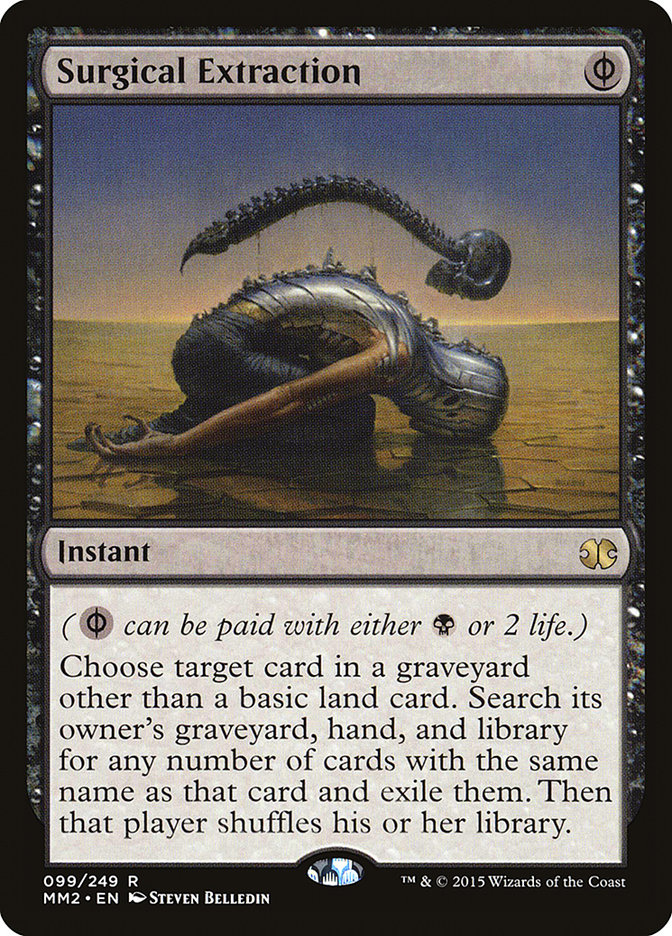
The addition of Surgical Extraction may seem unnecessary, but I think Reanimator is one of the most underrated decks going into this weekend. It had a miserable matchup against Miracles, which was far and away the primary factor keeping it on the fringe of the format. It’s fast, powerful, and consistent enough to win even a large tournament, and we would all do well to respect it earlier rather than later. It also happens to have a good matchup against Storm because it’s faster and Griselbrand can dig for the needed disruption to win a race.
These are the two combo decks I expect to show up in perform well this week in Las Vegas, and as a result form the core of this prong of the metagame for the time being. Graveyard hate is good against both, so coming with some is a good idea, but don’t be under the delusion that either deck is cold to it. Even Reanimator, seemingly dependent on its graveyard, sideboards in Show and Tell in nearly every matchup, so be aware.
The Light Horse?
Death and Taxes Neckbird (5-0)
Legacy is a format dominated by powerful spells from a time in Magic where creatures were hopelessly underpowered. It’s a throwback to the “good old days.” Or at least it’s supposed to be. Somehow, in the format of Brainstorm, Force of Will, and Dark Ritual, Flickerwisp and Gideon, Ally of Zendikar somehow emerge as playable Magic cards.
Cue the masses: Gideon?! Again?!?!? Will no one rid me of this turbulent planeswalker?
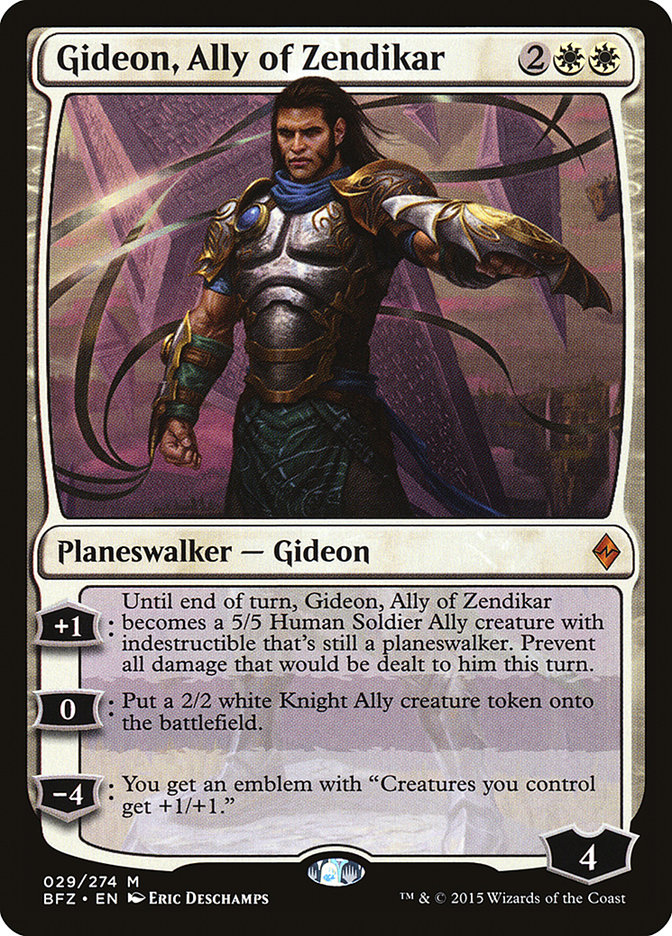
Death and Taxes has always been an oddball in Legacy, but it’s a powerful oddball and one that also suffered from a poor Miracles matchup. It’s historically great against Delver variants, which bodes well for its chances in the post-Miracles format.
Cue the masses again: But Ross, won’t Death and Taxes just get crushed by fast combo decks that they can’t interact with?
One, for similar reasons to its domination of Sneak and Show, Death and Taxes has always been good against Reanimator. There are going to be games where you don’t find the key cards or their hand is too blisteringly fast, but those aren’t the norm and serve to bias our opinion of the deck’s combo matchups.
Storm is a bit tricker, and once again you’re often dead to their fastest hands, but the slower Ad Nauseam Tendrils doesn’t kill before turn 3 that often, exchanging speed for stability, and a turn 2 Thalia, Guardian of Thraben backed up by Phyrexian Revoker for Lion’s Eye Diamond, Wasteland, and Rishadan Port can serve to cripple the Storm player’s mana. Any game where you untap on turn 3 safely, you have more than a fair shot to win.
The oddity of Death and Taxes in a format few spend significant time practicing often keeps the top players (not named Craig Wescoe) away from it, but it will reward those who invest time into it, as it’s a very complicated deck to play with and against. If you are set on playing blue cards, put in more reps in this matchup or pay the consequences.
The Traps
The above decks represent my choice for the top tier of the early metagame post-Miracles, and I would recommend playing whichever of them you feel most comfortable with. That said, there are some relatively popular and successful decks in Legacy that I don’t think are going to be as well-positioned in the coming weeks, and it starts with one that pains me to say: Elves.
Elves Julian23 (5-0)
Elves, another victim of having a poor Miracles matchup, seems like an easy pick for a big winner from the ban. But as I noted earlier, the removal of Miracles means a resurgence in combo decks, which is similarly bad for Elves’s standing in the metagame.
Moreover, look at the above Elves list from noted pilot of the deck, Julian Knabb. It’s very similar to what I would register right now, and also very similar to the lists I registered for nearly two years while playing the deck in 2013 and 2014. It’s not 2014 anymore. As much as we like to make Legacy out to be a format where you can play whatever you want and play it for years, in order to stay on top of the metagame, you need to evolve and adapt. Elves has been incapable of doing so and as a result is simply a worse deck than it was back then.
Its best matchups, midrange decks like Jund, Shardless Sultai, and Esper DeathBlade, are almost nonexistent these days, and Delver decks keep gaining more tools for the matchup, most recently Fatal Push. Notably, the removal suites in Legacy are about to get even worse than that for Elves, since Abrupt Decay was the worst commonly played kill spell against Elves, and its standing in the format just took a huge hit.
I don’t want to come off like a jaded ex, but unless some new cards are printed for the deck, Elves’s best days are behind it. Leave the pointy-eared tribe at home for the time being.
Colorless Eldrazi Brandon Johnson
I see Eldrazi and I see a deck that occupies a similar space to Death and Taxes, but is worse at all the things Death and Taxes does without any corresponding advantages. It’s less consistent, more vulnerable to opposing mana disruption, and has very little inherent card advantage so if it doesn’t land an early threat it’s in trouble going long.
Eldrazi is definitely more straightforward to pilot, which may tempt players who would otherwise run with Death and Taxes, but I’ve never been one to advocate for playing a worse deck to maximize short-term gain. Legacy may not be as ubiquitous as it once was, but it’s not going anywhere, so invest into the better deck and reap the rewards in time.
The deck is certainly powerful, and I wouldn’t be surprised to see a copy make a deep run, but that doesn’t mean it’s a wise choice. I’ll admit that Chalice of the Void seems particularly well-positioned right now, but if you’re interested in playing that card, I’d look into this new list of Death and Taxes that has been popping up online.
This metagame overview certainly hasn’t been exhaustive, but that would take a book, so you have to pick the decks you want to focus on and accept that, for any given tournament, you’ll have some blind spots. That’s the nature of Legacy, perhaps an even more defining characteristic of the format than Brainstorm and fetchlands. You’re going to run into the unexpected over fifteen-plus rounds, so put in as many reps with your deck of choice as you can.
And if you’re one of the former Miracles pilots scrambling to learn a different deck, know that you’re getting what you deserve.

Shame on you.